Choose exam board for KS4 Computer Science (GCSE)
Choose exam board for KS4 English
Choose exam board for KS4 French
Choose exam board for KS4 Geography
Choose exam board for KS4 German
Choose exam board for KS4 History
Choose tier for KS4 Maths
Choose exam board for KS4 Music
Choose exam board for KS4 Physical education (GCSE)
Choose exam board for KS4 Religious education (GCSE)
Choose exam board for KS4 Spanish
      New
      New

      I'm brave! Adjectives ending in -eux, -euse

      Learning outcomes

      I can use ‘ĂȘtre’ with a range of adjectives ending -eux to describe people’s traits and states.

      I can say a French tongue twister to practise the [eu] sound.

      Lesson 12 of 14
      New
      New
      • Year 3

      I'm brave! Adjectives ending in -eux, -euse

      Learning outcomes

      I can use ‘ĂȘtre’ with a range of adjectives ending -eux to describe people’s traits and states.

      I can say a French tongue twister to practise the [eu] sound.

      Lesson details

      Vocabulary and transcripts for this lessons

      Key learning points

      1. The sound-symbol correspondence [eu] sounds like the ‘eu’ in ‘deux’ (two).
      2. The silent final consonant -x is not pronounced, as in the adjective ‘heureux’.
      3. Adjectives ending in -eux change to -euse in the feminine form.

      Keywords

      • Eu - pronounced as in 'jeudi'

      • Adjective - a word that gives information about a noun

      • Masculine (m) form - form of an adjective that describes a boy, man or masculine noun

      • Feminine (f) form - form of an adjective that describes a girl, woman or feminine noun

      Common misconception

      An adjective agrees with the person who is talking, not the person being described. For example, if a boy says to a girl 'you are happy', 'happy' will be in the masculine form.

      An adjective agrees with the person who is being described, not the person who is talking. For example, if a boy says to a girl 'you are happy', 'happy' will be in the feminine form.

      You may wish to ask pupils to learn the French tongue twister off by heart, in their own time, and to perform it to the class. This will allow for greater consolidation of the SSC [eu].
      Teacher tip

      Equipment

      Licence

      This content is © Oak National Academy Limited (2026), licensed on Open Government Licence version 3.0 except where otherwise stated. See Oak's terms & conditions (Collection 2).

      Lesson video

      Loading...

      Some of our videos, including non-English language videos, do not have captions.

      Prior knowledge starter quiz

      6 Questions

      Q1.
      Match the SSC/sound to the correct example word.

      Correct Answer:[a],sac
      Correct Answer:[e],je
      Correct Answer:[eu],peu
      Correct Answer:[an],grand
      Correct Answer:SFC (silent final consonant),prix

      Q2.
      Which day of the week in French has the [eu] sound? Write the French word.

      Correct Answer: jeudi

      Q3.
      How do you say 'Monday' in French?

      Correct Answer: lundi

      Q4.
      Which day of the week is pictured?

      An image in a quiz
      lundi
      mercredi
      dimanche
      Correct answer: samedi
      jeudi

      Q5.
      What day comes after 'mardi'? Write the French word.

      Correct Answer: mercredi

      Q6.
      What is the correct translation of 'C'est vendredi aujourd'hui ?'.

      It is Friday today.
      Correct answer: Is it Friday today?
      Is it Friday here?
      Is it Thursday today?
      It is Thursday today.

      Assessment exit quiz

      6 Questions

      Q1.
      Which of these is the odd one out?

      Correct answer: cheval
      deux
      jeu
      jeudi
      peu

      Q2.
      Match the French to the correct English days of the week.

      Correct Answer:Monday,lundi
      Correct Answer:Tuesday,mardi
      Correct Answer:Wednesday,mercredi
      Correct Answer:Thursday,jeudi
      Correct Answer:Friday,vendredi
      Correct Answer:Saturday,samedi

      Q3.
      Choose the correct adjective for the emotion pictured.

      An image in a quiz
      sérieux
      curieux
      courageux
      Correct answer: heureux

      Q4.
      Choose the correct adjective for the emotion pictured.
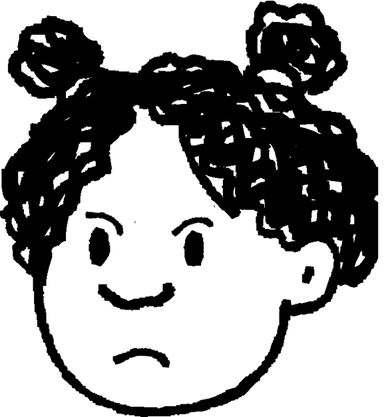
      An image in a quiz
      sérieux
      curieuse
      curieux
      heureuse
      Correct answer: sérieuse

      Q5.
      Change the following adjective into its feminine form: 'courageux'.

      Correct Answer: courageuse

      Q6.
      Translate the following into English: 'C'est mercredi. Je suis heureux.'

      Correct Answer: It is Wednesday. I am happy., It's Wednesday. I'm happy., It's Wednesday. I am happy., It is Wednesday. I'm happy.

      Lesson appears in

      UnitFrench / Me and others: singular 'ĂȘtre' and regular adjectives

      French