


New
New
Investigate the shapes made when rectangles are cut on the diagonal
I can describe the shapes made when rectangles are cut on the diagonal.


Lesson 8 of 10
New
New
- Year 3
Investigate the shapes made when rectangles are cut on the diagonal
I can describe the shapes made when rectangles are cut on the diagonal.
Lesson details
Key learning points
- An angle can be exactly a right angle.
- An angle can be less than or greater than a right angle.
- When you cut a square using two diagonal lines, you get four identical triangles.
- When you cut a rectangle that is not a square using two diagonal lines, you get two pairs of identical triangles.
Keywords
Diagonal - A straight line connecting one vertex to another, but is not the side or edge.
Common misconception
Pupils may find it hard to recognise when an angle is greater than a right angle.
You can model this by trying to move the obtuse angle (though pupils don't need to know the term yet) within a right angle checker. They should be able to see that it is too large to fit.
Encourage pupils to draw as accurately as possible. They can also cut out shapes to check that they are the same shape and size. Ask questions that allow pupils to make generalisations (e.g. when you divide squares using two diagonal lines, you get 4 right-angled triangles.)

Teacher tip

Licence
This content is © Oak National Academy Limited (2025), licensed on Open Government Licence version 3.0 except where otherwise stated. See Oak's terms & conditions (Collection 2).
Lesson video
Loading...
Prior knowledge starter quiz
6 Questions
Q1.Which of these shapes are rectangles?
Which of these shapes are rectangles?
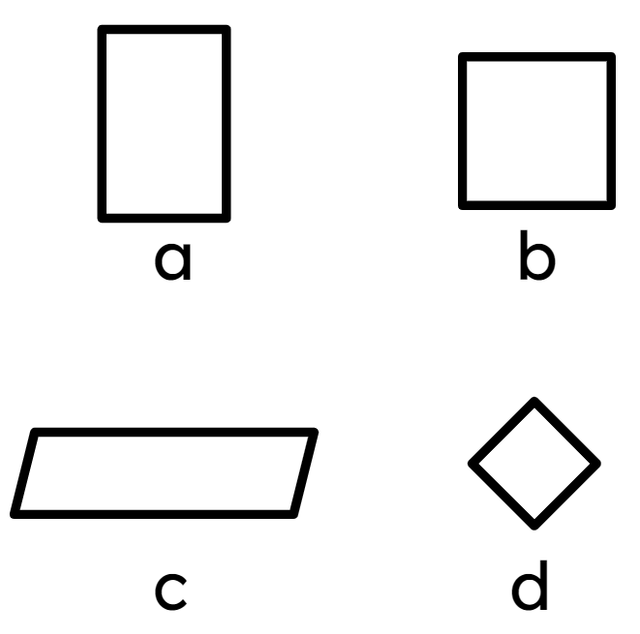
c
Q2.Which of these shapes are squares?
Which of these shapes are squares?
a
c
Q3.Why is this shape not a rectangle?
Why is this shape not a rectangle?
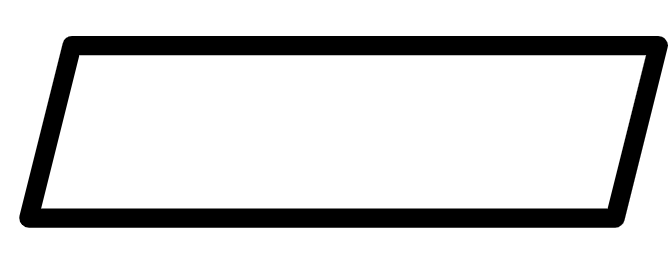
It does not have 4 straight sides.
It does not have any sides of equal length.
It is not a quadrilateral.
Q4.Match the description to the type of shape.
Match the description to the type of shape.

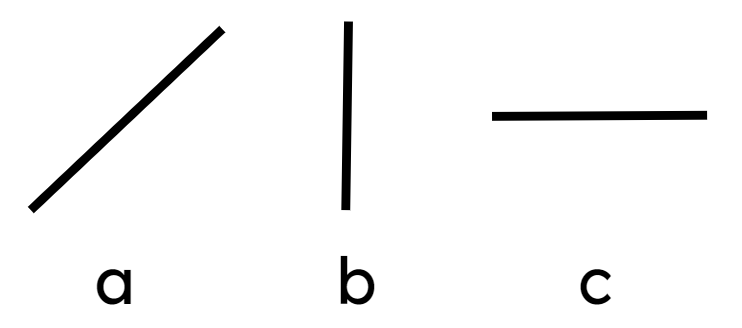
Q5.5. Match each line to the correct name.
5. Match each line to the correct name.
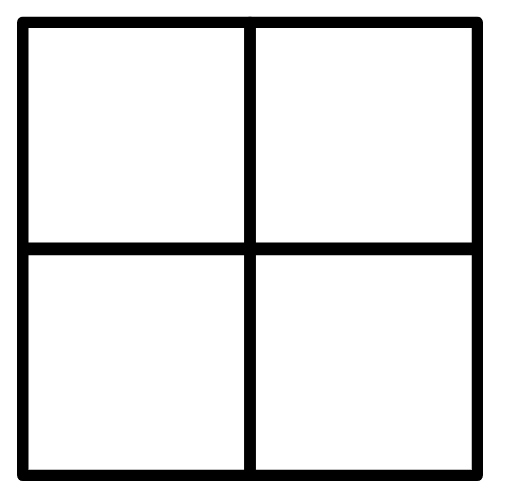
Q6.Look at this pattern. How many rectangles are there altogether?
Look at this pattern. How many rectangles are there altogether?
Assessment exit quiz
6 Questions
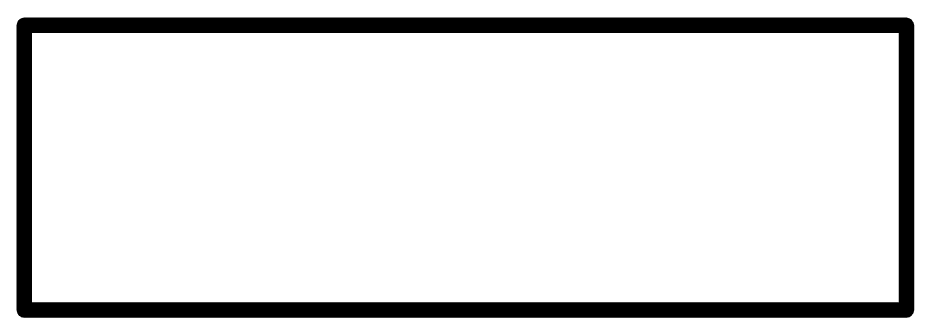
Q1.Aisha cuts this rectangle in half using a vertical line.
What shape will both halves be?
Aisha cuts this rectangle in half using a vertical line.
What shape will both halves be?
Squares
Triangles
Q2.Aisha cuts this rectangle in half using a diagonal line.
What shapes will both halves be?
Aisha cuts this rectangle in half using a diagonal line.
What shapes will both halves be?
Squares
Rectangles
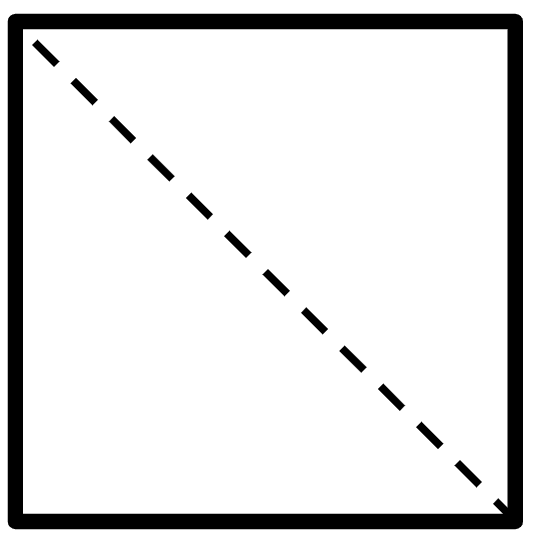
Q3.Aisha cuts this square into two triangles using one diagonal line.
Which of these statements is true?
Aisha cuts this square into two triangles using one diagonal line.
Which of these statements is true?
One triangle is larger than the other.
Q4.Laura uses two diagonal lines, cutting from each vertex at the top of the square to each at the bottom.
How many triangles would the rectangle be cut up into?
Laura uses two diagonal lines, cutting from each vertex at the top of the square to each at the bottom.
How many triangles would the rectangle be cut up into?

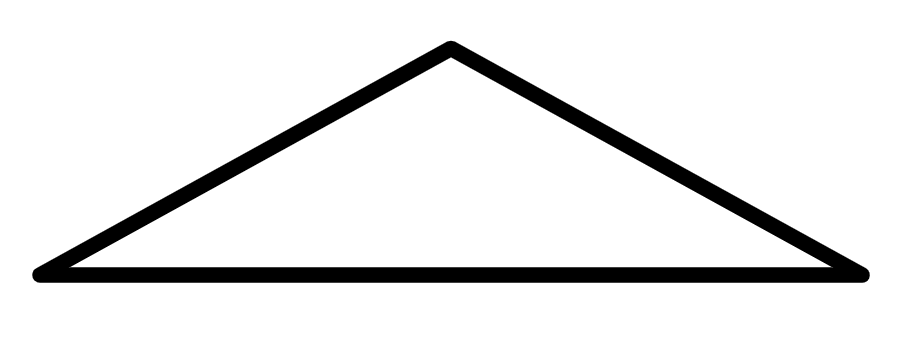
Q5.Aisha cuts a rectangle into four triangles. This is one of the triangles. How many angles inside the shape are smaller than a right angle?
Aisha cuts a rectangle into four triangles. This is one of the triangles. How many angles inside the shape are smaller than a right angle?
Q6.Which statements are always true?
When you make two diagonal cuts through any rectangle…
Which statements are always true?
When you make two diagonal cuts through any rectangle…
…all of the triangles are identical.
…all of the triangles will have right angles.
