Mutations and evolution in bacteria
I can describe examples of mutations in bacteria and explain why advantageous genetic variants became more common in the bacterial population.


- Year 11
- AQA
Mutations and evolution in bacteria
I can describe examples of mutations in bacteria and explain why advantageous genetic variants became more common in the bacterial population.
Lesson details
Key learning points
- An example of a mutation in bacteria that could be helpful to humans (e.g. ability to digest man-made waste).
- An example of a mutation in bacteria that is dangerous to humans (e.g. antibiotic resistance).
- Explanations of examples at the genetic level using ideas about mutation, natural selection and asexual reproduction.
- Explanations to include why advantageous genetic variants become more common in the bacteria over generations.
Keywords
Natural selection - Organisms that are better adapted to their environment are more likely to survive, reproduce and pass on their genes to their offspring.
Micro-organism - Microscopic living thing, such as a bacterium or an amoeba.
Mutation - A change in the nucleotide base sequence in the DNA of the genome.
Genetic variant - A region of DNA in which the sequence of nucleotide bases has been changed.
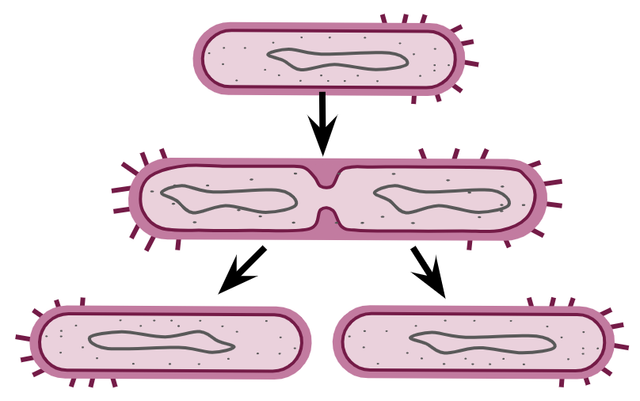
Asexual reproduction - A form of reproduction in which a cell divides to produce two genetically identical cells.
Common misconception
Pupils may think that bacteria are not living organisms and/or do not evolve. Pupils may also think that all bacteria are harmful.
The lesson explores two examples of evolution in bacteria, explaining each example through mutation, reproduction and natural selection.


Equipment
None required.

Licence
Lesson video
Loading...
Prior knowledge starter quiz
6 Questions
Q1.True or false? Bacteria are living organisms.
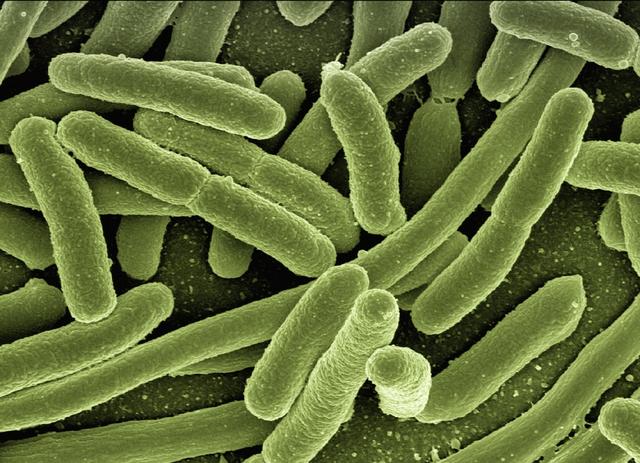
Q2.True or false? All bacteria are harmful to humans because they cause diseases.
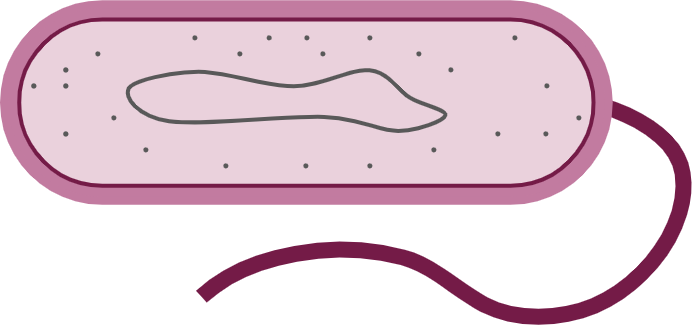
Q3.Which part of the bacterium is the DNA?

Q4.‘Evolution’ refers to …
Q5.Match each keyword to its correct definition.

Q6.Put the steps in the correct order to explain how an organism evolves by natural selection.
Assessment exit quiz
6 Questions
Q1.Microscopic living things such as bacteria and amoeba are known as .

Q2.The Oak pupils are discussing evolution. Who is correct?


Q3.Bacteria divide to make two identical cells in the process of reproduction.
Q4.True or false? Some antibiotics have evolved to be resistant to bacteria.
Q5.Bacteria can gain a new ability when mutation in their DNA creates a new ...
Q6.The Oak pupils are discussing evolution in bacteria. Who is correct?