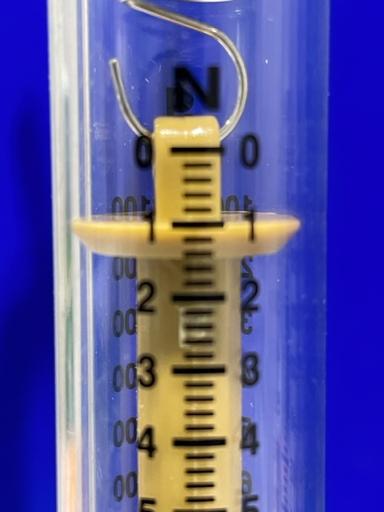
Pushes and pulls
I can measure the size of pushes and pulls using a force meter.


- Year 5
Pushes and pulls
I can measure the size of pushes and pulls using a force meter.


Lesson details
Key learning points
- Pushes and pulls are forces. Different types of forces can be contact or non-contact forces.
- Forces can change an object's speed, direction, and/or shape.
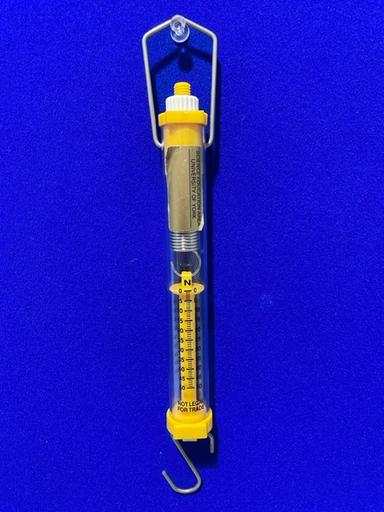
- Forces can be measured using a force meter, also known as a newton meter.
- A force meter works by stretching a spring – as the downward force due to gravity increases, the spring stretches.
- Forces are measured in newtons (N), named after Sir Isaac Newton.
Keywords
Force - A force is a push or a pull. Forces can make objects move, change speed, change direction or change shape.
Force meter - A force meter is a piece of equipment used to measure the size of a force. It is also called a newton meter.
Push - A push is a force that moves an object further away.
Pull - A pull is a force that brings an object closer.
Newtons (N) - The size of a force is measured in newtons.
Common misconception
Forces only act on moving objects.
Examples of forces being used to move stationary objects will be included.


Equipment
A range of force meters: see additional materials for further detailed guidance.

Content guidance
- Risk assessment required - equipment
- Exploration of objects

Supervision
Adult supervision required

Licence
Lesson video
Loading...
Prior knowledge starter quiz
6 Questions
Q1.Pushes and pulls are types of ________.
Q2.What type of force is the force of gravity?
Q3.Which types of forces occur when objects are touching each other?
Q4.Match each type of force to its example.

Q5.If you throw a ball in the air, it falls back down to the ground because...
Q6.Starting with the smallest, sort these objects into order of increasing strength of their gravitational pull.
Assessment exit quiz
6 Questions
Q1. can change an object's speed, direction, and/or shape.
Q2.Which of these are a type of force?
Q3.What unit are forces measured in?
Q4.Which of these images shows a force meter?
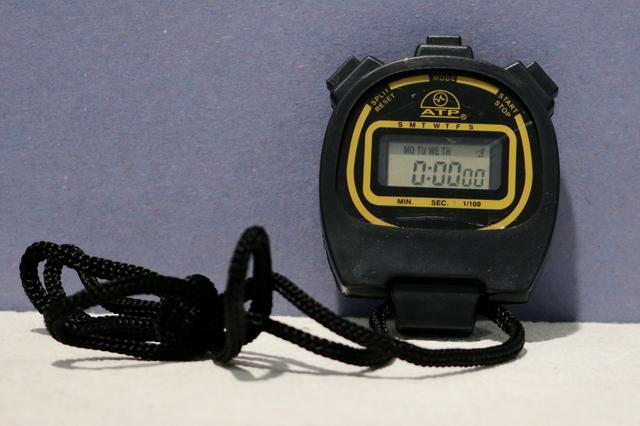


Q5.Which of these images shows the smallest force on the force meter?