Refraction through a rectangular block
I can describe what refraction is and draw accurate ray diagrams of refraction.


- Year 11
- AQA
Refraction through a rectangular block
I can describe what refraction is and draw accurate ray diagrams of refraction.
Lesson details
Key learning points
- Refraction is when waves travel from one transparent medium to another, causing a change in direction.
- When waves slow down, they turn towards the normal line (angle of incidence > angle of refraction).
- When waves speed up, they turn away from the normal line (angle of incidence < angle of refraction).
- Refraction can be investigated using a clear rectangular block, ray box and narrow slit, pencil, paper and a protractor.
- The greater the angle of incidence, the greater the angle of refraction.
Keywords
Refraction - Refraction occurs when waves travel from one transparent medium to another, causing a change in wave speed and direction.
Normal - The normal is an imaginary line drawn at 90° to a surface.
Angle of incidence - The angle of incidence is the angle between the incident ray and the normal.
Angle of refraction - The angle of refraction is the angle between the refracted ray and the normal.
Common misconception
Pupils sometimes rote-learn what specific examples of refraction look like, rather than developing a more general understanding of the direction waves turn based on changes in wave speed.
Teach pupils the general theory of refraction and apply it to a variety of different examples where wave speed changes (e.g. sound waves refract in the opposite direction to light at an air-glass boundary due to the different wave speeds).


Content guidance
- Risk assessment required - equipment

Supervision
Adult supervision required

Licence
Lesson video
Loading...
Prior knowledge starter quiz
6 Questions
Q1.What is represented by an arrow in a ray diagram?
Q2.Which of the following statements about light is correct?
Q3.Match the key words (relating to how light interacts with different objects) to their definitions.

Q4.In a ray diagram, the ray that approaches a surface or boundary is called the ray.
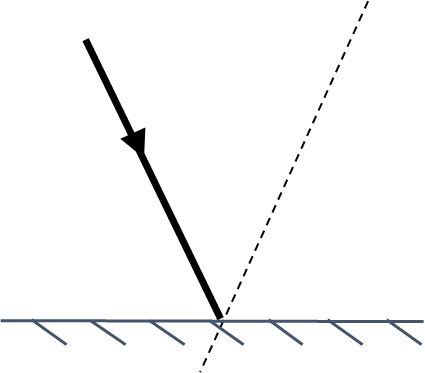
Q5.The ray diagram shown represents a light wave hitting a mirror.
Which of the following diagrams shows the normal line (represented by a dashed line) drawn correctly?
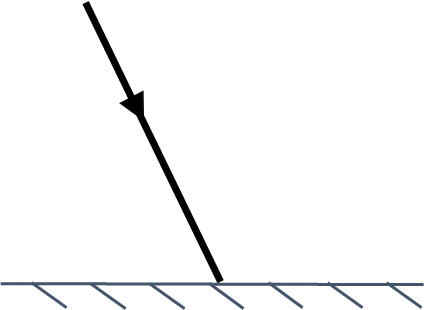
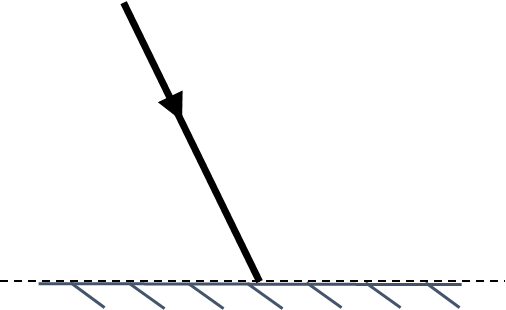
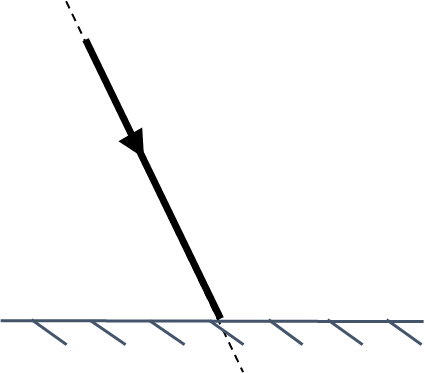
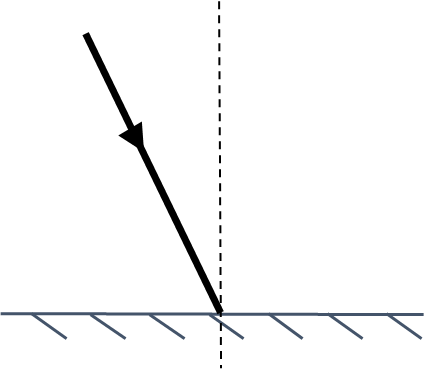
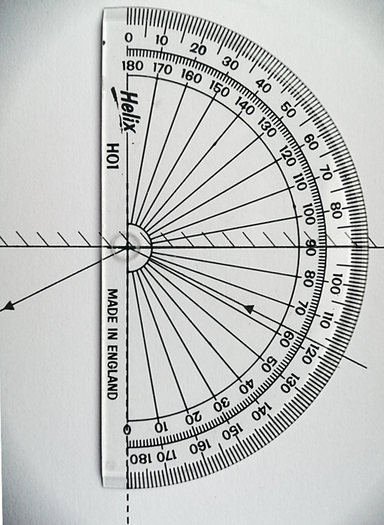
Q6.The ray diagram shown is for a light wave reflecting from a mirror. A student has placed a protractor over the diagram.
What is the angle of incidence?
Assessment exit quiz
6 Questions
Q1.Which of the following words describe what can happen when light hits an object?
Q2.What is refraction?
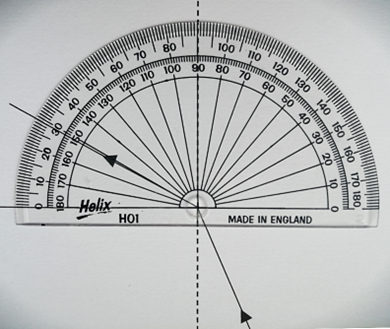
Q3.The ray diagram represents a light wave passing from one medium to another. The normal is drawn as a dashed line. A student has placed a protractor over the diagram. What is the angle of refraction?
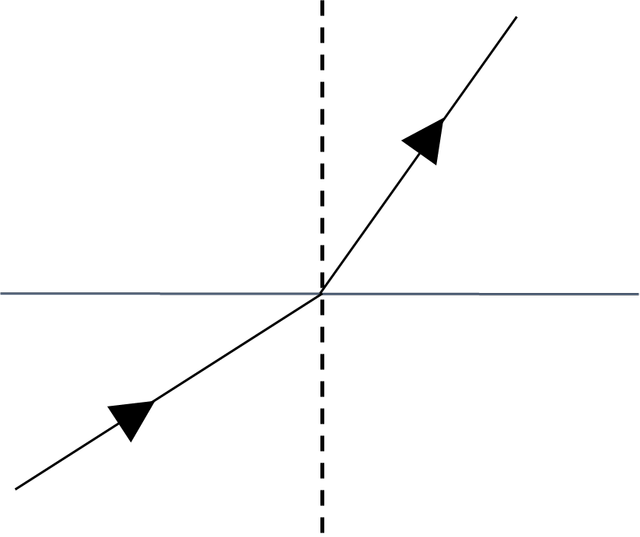
Q4.The ray diagram shows the refraction of a light wave when it crosses a boundary between two materials. Which of these statements are correct?
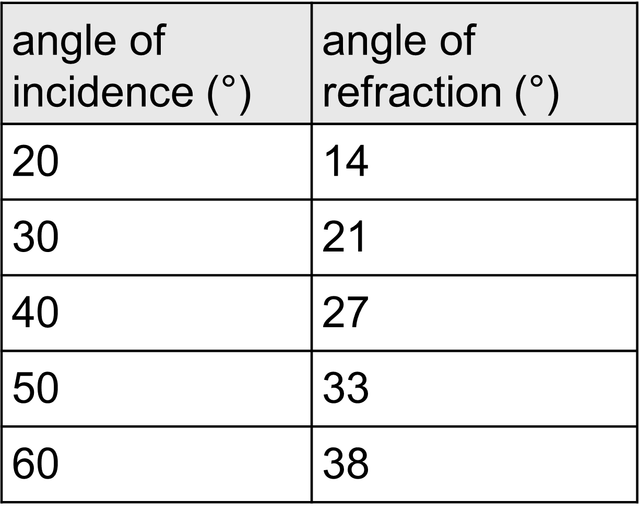
Q5.A student measures the angle of incidence and the angle of refraction at a boundary from air into a transparent block. The table shows the results. Which of these statements are correct?
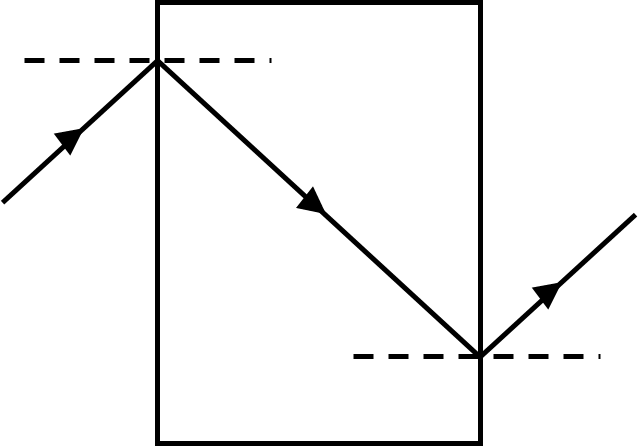
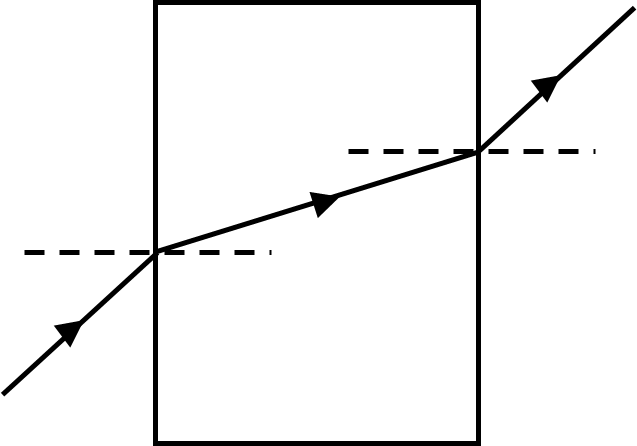
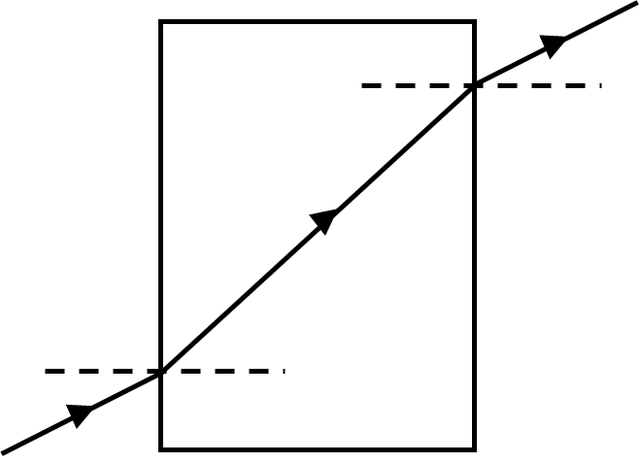
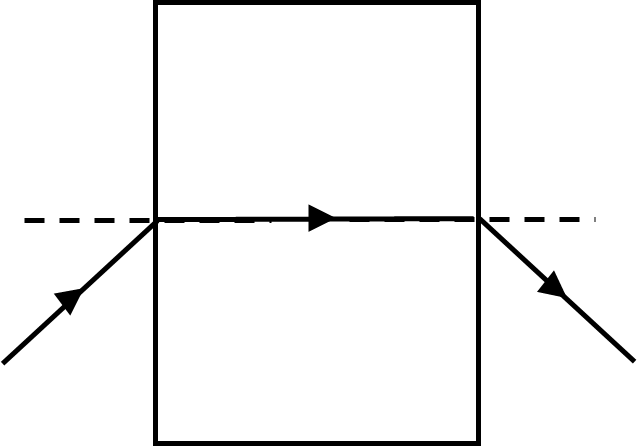
Q6.Which of these ray diagrams shows a possible path of a ray through a plastic block?