


Subtraction of positive and negative integers
I can use the mathematical structures that underpin subtraction to add and subtract positive and negative integers.


- Year 7
Subtraction of positive and negative integers
I can use the mathematical structures that underpin subtraction to add and subtract positive and negative integers.
Lesson details
Key learning points
- Any subtraction can be re-written as an equivalent addition.
- Subtracting a postive number is the same as adding a negative number.
- Subtracting a negative number is the same as adding a positive number.
Keywords
Additive inverse - The additive inverse of a number is a number that, when added to the original number, gives the sum of 0.
Absolute value - The absolute value of a number is its distance from zero. E.g. 5 and (−5) are both 5 away from zero and so both have an absolute value of 5.
Common misconception
Minus and a minus make a plus, 2 negatives make a positive, double negative makes a positive, etc.
The use of additive inverses should avoid this common misconception. Be aware that pupils maybe already be familiar with this statement.


Equipment

Licence
Lesson video
Loading...
Prior knowledge starter quiz
6 Questions
Q1.Complete the statement. The value of a number is its distance away from zero.
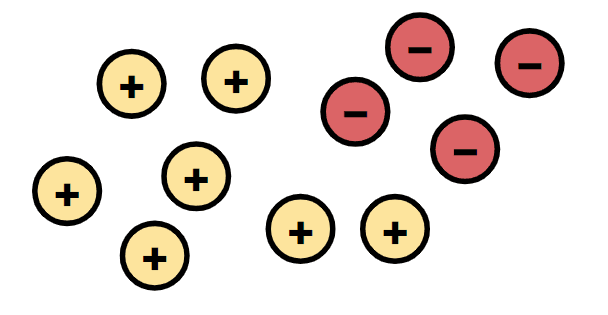
Q2.Which integer does this set of counters represent?
Q3.Work out: 9 + (-7) =
Q4.Work out (-5) + (-3)
Q5.Starting with the calculation with the lowest answer, sort these calculations in order of size from lowest answer to highest answer.
Q6.Work out: 10 + (-12) + 7 + (-6) =
Assessment exit quiz
6 Questions
Q1.Complete the statement. The additive inverse of a number is a number that, when added to the original number, gives the sum of .
Q2.Match together each of these subtractions with its equivalent addition.

Q3.Match each calculation to its answer.
Q4.Work out (-5) - (-8)
Q5.Work out: (-1) + 2 - (-3) - 4 + (-5) =
Q6.Complete the statement. The missing integer is

