


- Year 10
Types of data
I can identify the different types of data.
Lesson details
Key learning points
- Primary data is collected first-hand, secondary data was collected by someone else.
- Qualitative data is non-numeric information, quantitative is numeric information.
- Quantitative data can be either discrete or continuous.
Keywords
Primary/Secondary data - Primary data refers to data that are directly collected for specific use in an investigation. Secondary data refers to data that were previously collected for a different or unknown purpose.
Qualitative - Qualitative data are data that are non-numerical, and usually describe a quality of something.
Quantitative - Quantitative data are numerical data that can be counted or measured.
Discrete - Discrete data can only take specific numerical values.
Continuous - Continuous data can take any value on a scale to as much precision as we can measure it.
Common misconception
Pupils may think that primary data means data they collect first hand (and no one else can collect it).
Primary data refers to data that are directly collected for specific use in an investigation. This means that a team of researchers could collect the data for you for your investigation and this is still primary data.


Licence
Lesson video
Loading...
Prior knowledge starter quiz
6 Questions
Q1.Match each stage of the Statistical Enquiry Cycle to the order it should come in.

Q2.Laura has drawn a scatter graph to display her findings. Which stage of the Statistical Enquiry Cycle does this event fit in?
Q3.Match each stage of the Statistical Enquiry Cycle to an event.
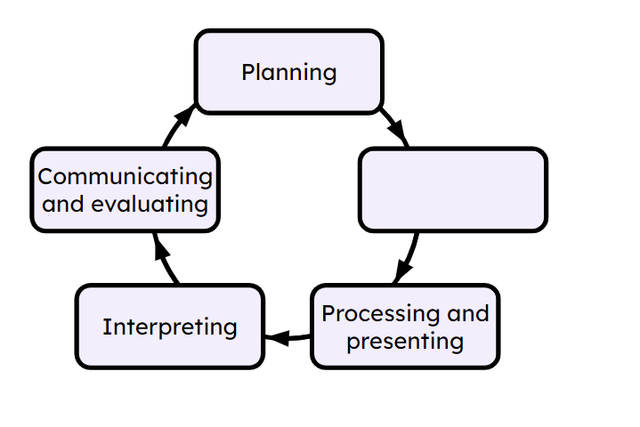
Q4.Which stage is missing from this Statistical Enquiry Cycle?
Q5.Aisha wants to know what type of music students like for the school prom. She plans to ask 'What type of music do you listen to?'. What statistics can she find with the data from this question?
Q6.Sam wants to find out whether pupils who got a high mark in French also did well in English. She collects data for 20 pupils on their end of year exam marks. Sam should draw a graph of the data.
Assessment exit quiz
6 Questions
Q1.Select all the examples of qualitative data.
Q2.Sofia has some qualitative data. Which summary statistic can she use with her data?
Q3.Andeep collects some data on the cost of meals in the school canteen. Which of these statements are correct?
Q4.Match each type of data to an example.
