


New
New
Use knowledge of the distributive law to solve problems in different contexts
I can use knowledge of the distributive law to solve problems in different contexts efficiently.


Lesson 5 of 5
New
New
- Year 4
Use knowledge of the distributive law to solve problems in different contexts
I can use knowledge of the distributive law to solve problems in different contexts efficiently.
Lesson details
Key learning points
- The distributive law allows you to add or subtract known times tables to solve problems.
- You can partition the group number or the size of a group to solve problems.
- Factors can be re-combined or subtracted to simplify 2-part problems.
Keywords
Distributive law - The distributive law says that multiplying a number by a group of numbers added together is the same as doing each multiplication separately.
Polygon - A polygon is a 2D shape made up of 3 or more straight lines.
Common misconception
Pupils may be less familiar with the names and properties of polygons and this may be a distraction from the focus of the learning.
Consider providing scaffolds for some pupils or pre-learning to revise shape names and properties.
Race off the counting method compared to using the distributive law to find the number of sides of a group of polygons. Hopefully, this will show that the distributive law is quicker and so more efficient.

Teacher tip

Licence
This content is © Oak National Academy Limited (2025), licensed on Open Government Licence version 3.0 except where otherwise stated. See Oak's terms & conditions (Collection 2).
Lesson video
Loading...
Prior knowledge starter quiz
6 Questions
Q1.Which factor has been partitioned using the distributive law in the second expression here? 5 × 16 = 5 × 8 + 5 × 8
Which factor has been partitioned using the distributive law in the second expression here? 5 × 16 = 5 × 8 + 5 × 8
5

8
Q2.92 + 60 =
92 + 60 =
Q3.64 + 73 =
64 + 73 =
Q4.Which of the following expressions represents the total number of doughnuts if I have 10 boxes of 5 chocolate doughnuts and 3 boxes of 5 strawberry doughnuts.
Which of the following expressions represents the total number of doughnuts if I have 10 boxes of 5 chocolate doughnuts and 3 boxes of 5 strawberry doughnuts.
10 × 3 + 5 × 5
10 + 5 + 3 + 5
10 + 3 + 5 + 5
Q5.Which of the following expressions is the array representing?
Which of the following expressions is the array representing?
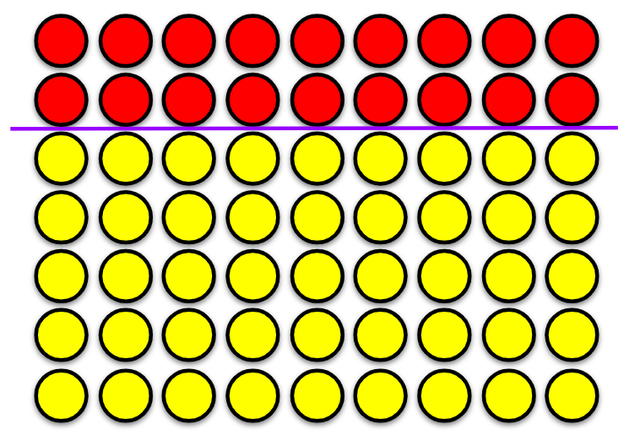
7 × 9 + 7 × 5
2 × 7 + 2 × 5
Q6.Double 78 is
Double 78 is
Assessment exit quiz
6 Questions
Q1.Which of the following expressions is equivalent to 19 × 7?
Which of the following expressions is equivalent to 19 × 7?
10 × 9 + 10 × 7
20 × 7 − 7 × 19
Q2.What is the missing number in the array shown?
What is the missing number in the array shown?

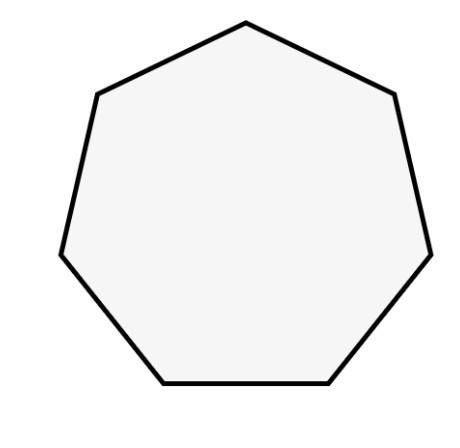
Q3.Use the distributive law to calculate how many sides there are in 16 heptagons.
Use the distributive law to calculate how many sides there are in 16 heptagons.
Q4.Use the distributive law to calculate how many sides there are in 19 hexagons.
Use the distributive law to calculate how many sides there are in 19 hexagons.
Q5.Andeep has 150 points to spend on battle robots. He wants to buy 8 Chuck robots, which are 19 points each. Can he afford it?
Andeep has 150 points to spend on battle robots. He wants to buy 8 Chuck robots, which are 19 points each. Can he afford it?
Yes
Q6.Izzy has 120 points to spend on battle robots. She wants to buy 8 Ice robots which are 15 points each. Can she afford it?
Izzy has 120 points to spend on battle robots. She wants to buy 8 Ice robots which are 15 points each. Can she afford it?
No
