


New
New
Use the divisibility rules to find multiples of 3
I know the divisibility rule for multiples of 3 and can use it with 3- and 4-digit numbers.


Lesson 4 of 5
New
New
- Year 4
Use the divisibility rules to find multiples of 3
I know the divisibility rule for multiples of 3 and can use it with 3- and 4-digit numbers.
Lesson details
Key learning points
- Numbers that can be divided by 3 and leave no remainder are divisible by 3
- To find the digit sum of a number, add the digits in the number together so the digit sum of 17 is 1 + 7 which equals 8
- For a number to be divisible by three, the dgit sum of the number must be a divisible by 3
Keywords
Digit sum - The sum of the digits of a number is called its digit sum.
Divisible / Divisibility - Divisibility is when division of a number results in another whole number. A number is divisible by another if it can be shared exactly with no remainder.
Multiple - A multiple is the result of multiplying a number by another whole number.
Common misconception
Lack of understanding of key terms such as: 'digit,' 'number.'
Explain clearly the difference between the two key terms and encourage children to test the divisibility rule on both 3 digit and 4 digit numbers.
Encourage children to test the divisibility rule starting with 2 digit numbers then moving on to 3 and 4 digit numbers. By this point fluency in 3 times tables will support children in solving these problems. Continue to chorally rehearse the 3 times tables.

Teacher tip

Licence
This content is © Oak National Academy Limited (2025), licensed on Open Government Licence version 3.0 except where otherwise stated. See Oak's terms & conditions (Collection 2).
Lesson video
Loading...
Prior knowledge starter quiz
6 Questions
Q1.What single number fits into this gap to make this correct? 15 ÷ 3 = ___
What single number fits into this gap to make this correct? 15 ÷ 3 = ___
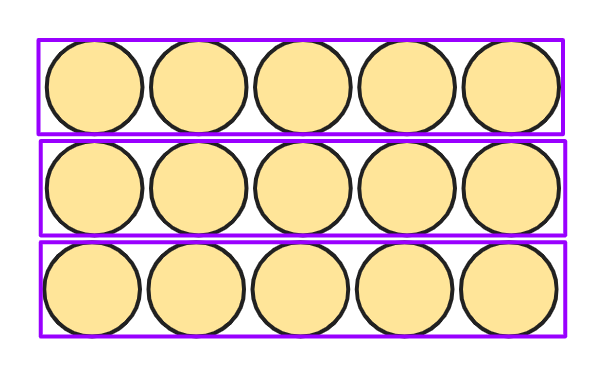
4
3
Q2.Order the multiples of 3 from the highest to lowest.
Order the multiples of 3 from the highest to lowest.
Q3.Identify the multiples of 3
Identify the multiples of 3
8
14
Q4.Match the expressions to the products.
Match the expressions to the products.

Q5.Andeep has 36 guinea cards and shares them between 3 friends. How many cards does each friend get?
Andeep has 36 guinea cards and shares them between 3 friends. How many cards does each friend get?
Q6.A bakery has baked 270 cupcakes. They are packed into boxes of 3 Which calculations will help to solve this problem?
A bakery has baked 270 cupcakes. They are packed into boxes of 3 Which calculations will help to solve this problem?
90 + 90 − 90
270 − 3
Assessment exit quiz
6 Questions
Q1.Select the multiples of 3
Select the multiples of 3
46
49
Q2.What is the digit sum for 249?
What is the digit sum for 249?
Q3.Match the numbers to their digit sum.
Match the numbers to their digit sum.
Q4.Is 3,021 a multiple of 3?
Is 3,021 a multiple of 3?
No
Q5.Is 6,413 a multiple of 3?
Is 6,413 a multiple of 3?
Yes
Q6.Is 432 a multiple of 3?
Is 432 a multiple of 3?
No
