What you are like: singular regular adjective agreement
Learning outcomes
I can use 'être' with adjectives to make simple statements about myself and questions about others.
I can distinguish between [an/en] and other sounds [a] [e] and [ain].


- Year 3
What you are like: singular regular adjective agreement
Learning outcomes
I can use 'être' with adjectives to make simple statements about myself and questions about others.
I can distinguish between [an/en] and other sounds [a] [e] and [ain].


Lesson details
Vocabulary and transcripts for this lessons
Key learning points
- The sound-symbol correspondence [an/en] can be contrasted for practice with [a], [e] and [ain].
- Adjectives often add -e to describe a female person; adjectives already ending in -e do not change.
- 'Je suis', 'tu es' and 'elle, il est' are all parts of the verb 'être' to be, being.
Keywords
[an/en] - pronounced as in 'enfant'
Être - verb meaning 'to be', being
Tu es - meaning 'you are' for one person
Adjective agreement - a change in adjective ending, for example, adding an -e to describe a woman or a girl
Common misconception
French adjectives never change form.
French adjectives do change; this is called adjective agreement. One change is to match the gender of the person described.


Equipment

Licence
Lesson video
Loading...
Some of our videos, including non-English language videos, do not have captions.
Prior knowledge starter quiz
6 Questions
Q1.What SSCs are there in the word 'enfant'?
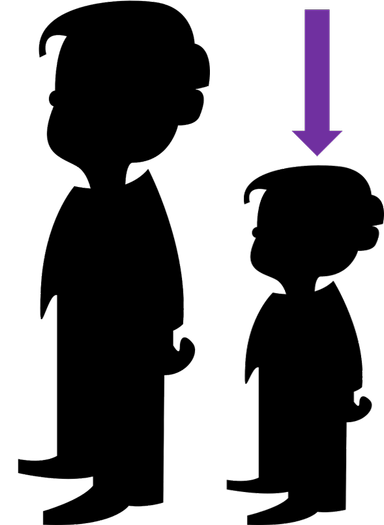
Q2.Which word matches this picture?
Q3.Match the French and the English.

Q4.How do you say: You are tall.
Q5.Which of the following means 'I am'?
Q6.Which of the following sentences is written about a girl?
Assessment exit quiz
6 Questions
Q1.Which names have the [an/en] sound?
Q2.Pierre is talking about himself, true or false? Tu es français.
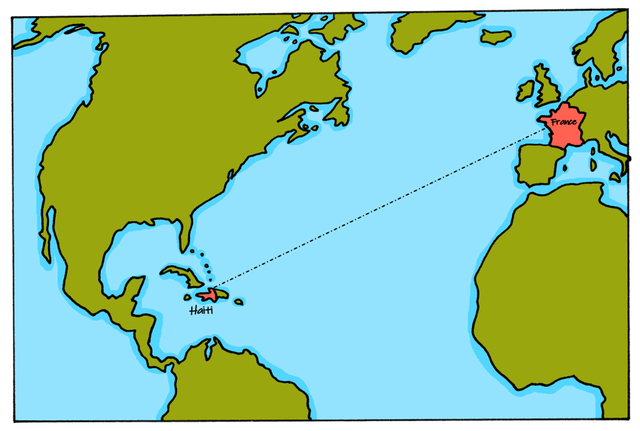
Q3.Where is Haiti?