


What is citizenship?


Lesson details
Learning outcome
I can explain what the subject of citizenship includes, what social change is and how statistics can help enact social change.
Key learning points
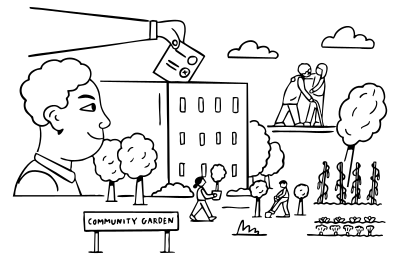
- Citizenship covers concepts such as the law, democracy, the economy, identities, communities and rights.
- There are many ways to make social change happen like volunteering, pressure groups and lobbying.
- Statistics help me understand society and social change.
Keywords
Citizen - a person who belongs to a country and has certain rights as they either live in the country, or were born in the country; it is a legal status given to people
Social change - changes that occur in society over time
Statistics - pieces of data or facts gathered in the form of numbers
Common misconception
Citizenship is only about legal status.
Citizenship is all about being part of a society and being an active citizen.
Teacher tip
Teaching about citizenship effectively requires a mix of clear explanations, engaging activities, and real-world connections.

Licence

Lesson video
Loading...
Prior knowledge starter quiz
6 Questions
Q1.Which of these is not an example of something you might learn about in citizenship?
Q2.Match the skill to the subject you are most likely to study it in.

Q3.Which of the following is the correct definition for the word society?
Q4.Which of the following is a reason why it is important to learn about citizenship at school?
Q5.Which of the following skills will you be developing through citizenship education?
Q6.True or false? There is always a right and wrong answer in citizenship.
Assessment exit quiz
6 Questions
Q1.Which of the following concepts will you study in citizenship?
Q2.One example of a citizenship concept is democracy. Which of the following would you learn about when studying democracy in citizenship?
Q3.Which of the following is the correct definition for statistics?
Q4.Match the word to its correct definition.
Q5.Which of the following are examples of methods to make social change happen?
Q6.True or false? Statistics can help citizens who are trying to create social change.
To help you plan your 7 citizenship lesson on: What is citizenship?, download all teaching resources for free and adapt to suit your pupils' needs...
To help you plan your 7 citizenship lesson on: What is citizenship?, download all teaching resources for free and adapt to suit your pupils' needs.
The starter quiz will activate and check your pupils' prior knowledge, with versions available both with and without answers in PDF format.
We use learning cycles to break down learning into key concepts or ideas linked to the learning outcome. Each learning cycle features explanations with checks for understanding and practice tasks with feedback. All of this is found in our slide decks, ready for you to download and edit. The practice tasks are also available as printable worksheets and some lessons have additional materials with extra material you might need for teaching the lesson.
The assessment exit quiz will test your pupils' understanding of the key learning points.
Our video is a tool for planning, showing how other teachers might teach the lesson, offering helpful tips, modelled explanations and inspiration for your own delivery in the classroom. Plus, you can set it as homework or revision for pupils and keep their learning on track by sharing an online pupil version of this lesson.
Explore more key stage 3 citizenship lessons from the Citizenship - what's it all about? unit, dive into the full secondary citizenship curriculum, or learn more about lesson planning.