


What is power and influence?


Lesson details
Learning outcome
I can explain different types of power and influence.
Key learning points
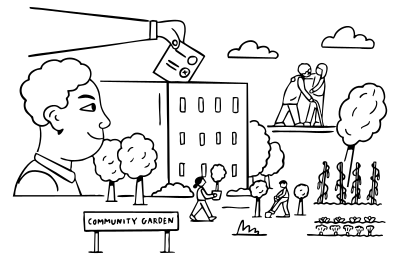
- Some of the types of power within society include: political power, legal power, media power and hard power.
- Types of influence within society include: political influence, legal influence, media influence and social influence.
- Some people may argue that power is needed to influence others, as this can give you status, notoriety and popularity.
- Other people think that power is not needed to be influential as there are lots of normal influential people.
Keywords
Power - having control or authority over something or someone
Parliamentary sovereignty - the principle that Parliament is the supreme legal authority in the UK; Parliament can create, amend or end any UK law
Influence - the power to affect or change someone's thoughts, actions, or decisions
Common misconception
Young people have little or no power to influence political systems or decisions because they are too young, not eligible to vote, or lack resources and authority.
Individuals, including young people can be influential as they are still able to lobby MPs, liaise with the police, engage with media and take part in campaigns.
Teacher tip
The final task could be extended by asking pupils to consider issues or concerns they have both locally and nationally and how they could go about influencing these.

Content guidance
Depiction or discussion of discriminatory behaviour
Depiction or discussion of sensitive content
Depiction or discussion of violence or suffering
Depiction or discussion of serious crime

Supervision
Adult supervision required

Licence

Lesson video
Loading...
Prior knowledge starter quiz
6 Questions
Q1.Who represents us in UK Parliament?
Q2.Who makes the laws in the UK?
Q3.Who must follow the law in the UK?
Q4.Match the active citizenship method to its description.

Q5.What is the name given to information that can reach a large number of people?
Q6.Which is not a position within Parliament?
Assessment exit quiz
6 Questions
Q1.What is the definition of power?
Q2.Which of the following is an example of media power?
Q3.Match the following terms to their correct definitions.
Q4.Which is the most powerful group in Parliament?
Q5.Which of the following statements best explains how young people can influence political decisions, even if they aren't eligible to vote?
Q6.Who was a 'normal' person who had huge political and legal influence during the US Civil Rights Movement?
To help you plan your 10 citizenship lesson on: What is power and influence?, download all teaching resources for free and adapt to suit your pupils' needs...
To help you plan your 10 citizenship lesson on: What is power and influence?, download all teaching resources for free and adapt to suit your pupils' needs.
The starter quiz will activate and check your pupils' prior knowledge, with versions available both with and without answers in PDF format.
We use learning cycles to break down learning into key concepts or ideas linked to the learning outcome. Each learning cycle features explanations with checks for understanding and practice tasks with feedback. All of this is found in our slide decks, ready for you to download and edit. The practice tasks are also available as printable worksheets and some lessons have additional materials with extra material you might need for teaching the lesson.
The assessment exit quiz will test your pupils' understanding of the key learning points.
Our video is a tool for planning, showing how other teachers might teach the lesson, offering helpful tips, modelled explanations and inspiration for your own delivery in the classroom. Plus, you can set it as homework or revision for pupils and keep their learning on track by sharing an online pupil version of this lesson.
Explore more key stage 4 citizenship lessons from the How powerful is the media? unit, dive into the full secondary citizenship curriculum, or learn more about lesson planning.