


Antibiotics


Lesson details
Learning outcome
I can explain what antibiotics are, and how they should be used to limit the spread of antibiotic resistance in bacteria.
Key learning points
- Antibiotics are medicines that can only be used to treat bacterial infections; they do not work against viruses.
- Some antibiotics work by stopping bacteria developing a cell wall.
- Bacteria can become resistant to antibiotics, and resistance can spread if antibiotics are not used correctly.
- Antibiotics must only be taken when they are prescribed by a doctor.
- Do not take antibiotics for the wrong reasons and always complete the prescribed course.
Keywords
Antibiotics - Antibiotics are substances that slow down or stop the growth of bacteria
Bacteria - Bacteria are single-celled prokaryotes.
Bacterial cell wall - The bacterial cell wall is made of murein, which is strong enough to withstand osmotic pressure while also allowing substances to pass through.
Antibiotic resistance - When bacteria mutate and become less susceptible to the action of antibiotics.
Common misconception
Pupils may think that antibiotics work on all pathogens.
Antibiotics only kill bacteria. Antibiotics can only kill certain bacteria and so the doctor will prescribe the correct one.
Teacher tip
It would be easy to say that intensive farming should be stopped due to animal welfare. However, in order to keep up with the demand for meat, farmers have to use different ways to keep the costs down.

Equipment
None required.

Content guidance
Depiction or discussion of violence or suffering

Supervision
Adult supervision required

Licence

Lesson video
Loading...
Prior knowledge starter quiz
6 Questions
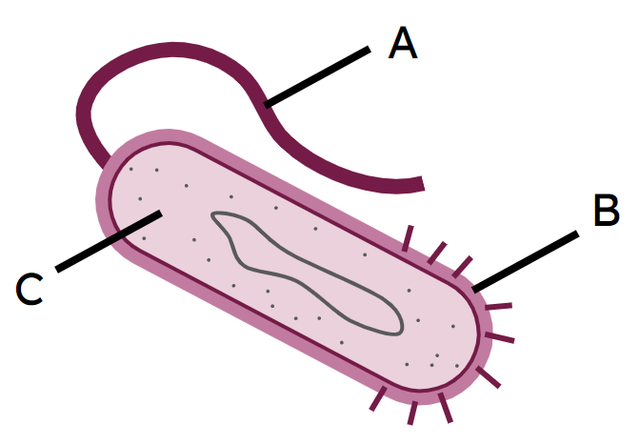
Q1.Label the parts of the bacterial cell.

Q2.Plant cells and bacterial cells have a cell wall. Select the function of the cell wall.
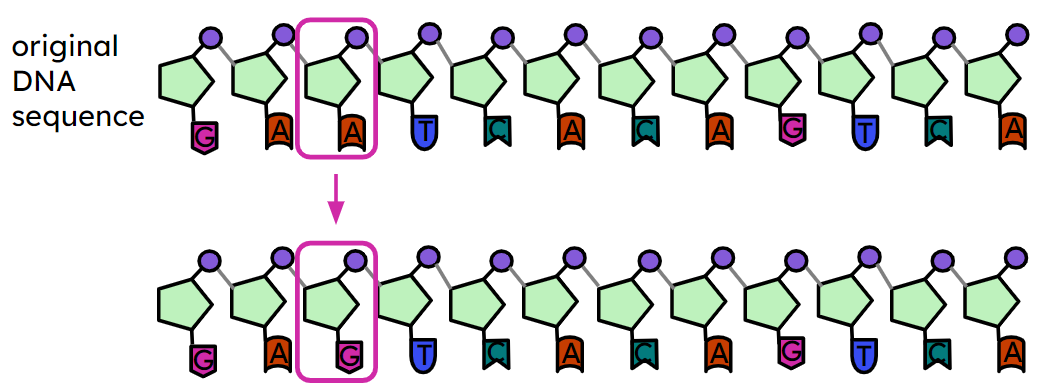
Q3.A change in the sequence of nucleotide bases in the DNA of the genome is called a .
Q4.What is a pathogen?
Q5.Which diseases are caused by bacteria?
Q6.Do bacteria reproduce asexually or sexually?
Assessment exit quiz
6 Questions
Q1.True of false? Antibiotics will cure the flu.
Q2.Some antibiotics, including penicillin, work by preventing the formation of the bacterial .
Q3.True or false? Antibiotic resistance means that the bacteria are immune to the antibiotic.
Q4.Who is incorrect?
Q5.How can we reduce the spread of antibiotic resistance?
Q6.Starting with a mutation arising, put these steps in order to show how antibiotic resistance develops.
To help you plan your 11 combined science lesson on: Antibiotics, download all teaching resources for free and adapt to suit your pupils' needs...
To help you plan your 11 combined science lesson on: Antibiotics, download all teaching resources for free and adapt to suit your pupils' needs.
The starter quiz will activate and check your pupils' prior knowledge, with versions available both with and without answers in PDF format.
We use learning cycles to break down learning into key concepts or ideas linked to the learning outcome. Each learning cycle features explanations with checks for understanding and practice tasks with feedback. All of this is found in our slide decks, ready for you to download and edit. The practice tasks are also available as printable worksheets and some lessons have additional materials with extra material you might need for teaching the lesson.
The assessment exit quiz will test your pupils' understanding of the key learning points.
Our video is a tool for planning, showing how other teachers might teach the lesson, offering helpful tips, modelled explanations and inspiration for your own delivery in the classroom. Plus, you can set it as homework or revision for pupils and keep their learning on track by sharing an online pupil version of this lesson.
Explore more key stage 4 combined science lessons from the Medicines and new treatments for disease unit, dive into the full secondary combined science curriculum, or learn more about lesson planning.