


Classification into kingdoms and domains: sub-cellular evidence


Lesson details
Learning outcome
I can describe the classification of organisms based on evidence from their phenotype and cells.
Key learning points
- Organisms are classified into groups within larger groups, from species up to kingdoms and domains
- There are domains of eukaryotes (animals, plants, fungi and protists), bacteria and archaea (both prokaryotic)
- Organisms can be classified using evidence of their macroscopic features (phenotype)
- Organisms can be classified using evidence of their and microscopic cell structures
Keywords
Species - a group of similar organisms that can breed together to produce fertile offspring
Kingdom - A division of living things in the classification system. The five kingdoms are animals, plants, fungi, protist and prokaryotes.
Domain - The three domain system of classification organises organisms into three large groups: Bacteria, Archaea and Eukaryota.
Phenotype - the physical characteristics of an organism
Common misconception
Pupils may think that the modern classification system that we use today is complete.
Remind pupils why new data from experiments or observations leads to changes in models or theories.
Teacher tip
Reinforce ideas about how developments in technology and scientific methods (microscopy and gene technology) has provided evidence for changing theories over time.

Licence

Lesson video
Loading...
Prior knowledge starter quiz
6 Questions
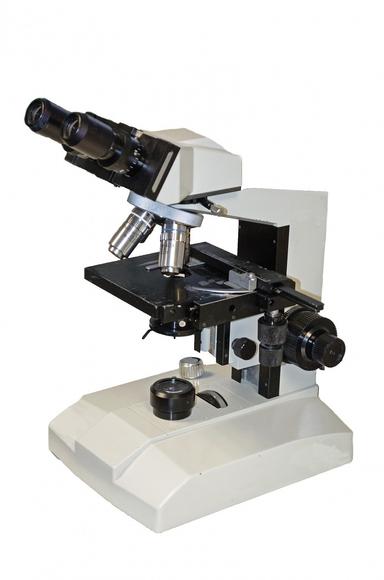
Q1.Which type of microsope is shown in the image?

Q2.Which type of cells contain membrane bound sub-cellular structures, including a nucleus?
Q3.Which type of cell, prokaryotic or eukaryotic, is generally smaller in size?
Q4.If a bacterial cell has a diameter of 1.5 micrometres, how many times smaller is it compared to a eukaryotic cell with a diameter of 15 micrometres?
Q5.Which of the following statements about microscopes are true?
Q6.Calculate the real size of a cell if its image size is 200 micrometres and the magnification is 400x.
Assessment exit quiz
6 Questions
Q1.Which scientist is known as the father of modern classification and introduced the binomial naming system?
Q2.Starting with the largest group, sort the groups of Linnean classification into the correct order.
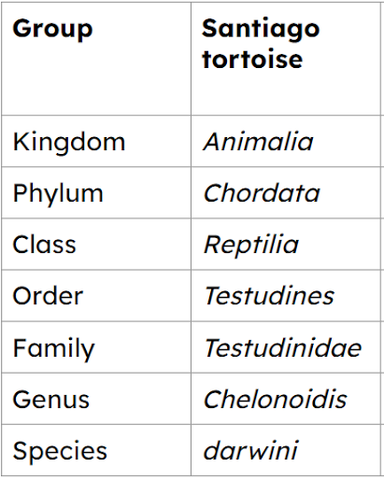
Q3.What is the binomial name for the Santiago tortoise?
Q4.What is the significance of Woese's contribution to classification?
Q5.According to the three-domain system, which domain includes animals, plants, fungi, and protists?
Q6.Which domain contains organisms that are often extremophiles and live in extreme environments?
To help you plan your 11 combined science lesson on: Classification into kingdoms and domains: sub-cellular evidence, download all teaching resources for free and adapt to suit your pupils' needs...
To help you plan your 11 combined science lesson on: Classification into kingdoms and domains: sub-cellular evidence, download all teaching resources for free and adapt to suit your pupils' needs.
The starter quiz will activate and check your pupils' prior knowledge, with versions available both with and without answers in PDF format.
We use learning cycles to break down learning into key concepts or ideas linked to the learning outcome. Each learning cycle features explanations with checks for understanding and practice tasks with feedback. All of this is found in our slide decks, ready for you to download and edit. The practice tasks are also available as printable worksheets and some lessons have additional materials with extra material you might need for teaching the lesson.
The assessment exit quiz will test your pupils' understanding of the key learning points.
Our video is a tool for planning, showing how other teachers might teach the lesson, offering helpful tips, modelled explanations and inspiration for your own delivery in the classroom. Plus, you can set it as homework or revision for pupils and keep their learning on track by sharing an online pupil version of this lesson.
Explore more key stage 4 combined science lessons from the Classification in modern biology unit, dive into the full secondary combined science curriculum, or learn more about lesson planning.