


Insulin and the control of blood sugar level


Lesson details
Learning outcome
I can describe the role of the hormone insulin in controlling blood sugar level.
Key learning points
- If conditions in the body change too much this can be dangerous to our health (e.g. enzymes).
- Homeostasis is the regulation of internal conditions for optimum enzyme activity.
- Glucose travels in the blood plasma and is delivered to cells for aerobic respiration.
- The hormone insulin helps to keep human blood sugar level constant.
- The pancreas secretes insulin when blood sugar level is too high; it causes liver cells to convert glucose to glycogen.
Keywords
Homeostasis - homeostasis is the regulation of the internal conditions to maintain optimum conditions for enzyme action and all cell functions
Respiration - a chemical reaction in living organisms that releases energy from glucose
Insulin - a hormone secreted by the pancreas when blood glucose is too high, lowering blood glucose levels
Glucose - a sugar that travels in the blood and is supplied to cells for respiration
Glycogen - a stored form of glucose found in liver and muscle cells
Common misconception
Not linking the idea that glucose concentration is important for cellular respiration, even during times of rest.
There are a selection of slides in LC2 that specifically link glucose and respiration and discuss the idea of respiration occurring during rest.
Teacher tip
You can role play the sequence of events that occur after the pancreas detects elevated insulin levels. You can model this using diagrams and paper cut outs or your could role play it in person with different stations being the pancreas and liver and students being insulin, glucose and glycogen.

Equipment
None required.

Licence

Lesson video
Loading...
Prior knowledge starter quiz
6 Questions
Q1.What is the name of the sugar that is a reactant for respiration?
Q2.Which of the following is a biological catalyst?
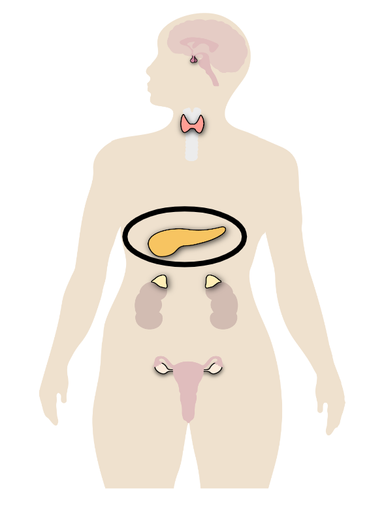
Q3.Which gland in the endocrine system is circled in this image?
Q4.Match the activity to the effect it has on blood glucose concentration.

Q5.How do hormones travel around the body?
Q6.In which sub-cellular structure does aerobic respiration take place?
Assessment exit quiz
6 Questions
Q1.Which organ in the body detects changes in blood glucose concentration?
Q2.Which process regulates the internal conditions in the body for optimum enzyme activity?
Q3.What is the name of the hormone that the pancreas secretes if blood glucose levels are too high?
Q4.Put these steps in order to show what happens after eating a meal.
Q5.What do liver and muscle cells store glucose as?
Q6.Which statements are correct?
To help you plan your 10 combined science lesson on: Insulin and the control of blood sugar level, download all teaching resources for free and adapt to suit your pupils' needs...
To help you plan your 10 combined science lesson on: Insulin and the control of blood sugar level, download all teaching resources for free and adapt to suit your pupils' needs.
The starter quiz will activate and check your pupils' prior knowledge, with versions available both with and without answers in PDF format.
We use learning cycles to break down learning into key concepts or ideas linked to the learning outcome. Each learning cycle features explanations with checks for understanding and practice tasks with feedback. All of this is found in our slide decks, ready for you to download and edit. The practice tasks are also available as printable worksheets and some lessons have additional materials with extra material you might need for teaching the lesson.
The assessment exit quiz will test your pupils' understanding of the key learning points.
Our video is a tool for planning, showing how other teachers might teach the lesson, offering helpful tips, modelled explanations and inspiration for your own delivery in the classroom. Plus, you can set it as homework or revision for pupils and keep their learning on track by sharing an online pupil version of this lesson.
Explore more key stage 4 combined science lessons from the Coordination and control: hormones and the human endocrine system unit, dive into the full secondary combined science curriculum, or learn more about lesson planning.