


Practising handwriting in a non-chronological report


Lesson details
Learning outcome
I can write sections of a non-chronological report in legible, cursive handwriting.
Key learning points
- Information in a non-chronological report is organised using a title, subheadings and paragraphs.
- The subheadings start with a capital letter and are underlined.
- The capital letter does not join to the next letter in the letter string.
- The joins used depend on which letter is joining to which letter.
- The letter formation and letter spacing is accurate to ensure the writing is legible.
Keywords
Non-chronological report - a non-fiction text that informs about a subject or event and that is written out of time order
Subheading - a word, phrase or sentence used to introduce part of a text
Join - connecting together
Letter spacing - the amount of space between individual letters in a word
Legible - text is clear and easy to read and understand
Common misconception
As children start to write longer paragraphs in cursive handwriting their hands can get sore which can lead to them making mistakes.
Model to the children that it is good practice to take a break when writing to stretch your hand if it is becoming sore.
Teacher tip
Giving the children a visual success criteria for their handwriting can help to remind them of the cursive features before writing. It can also act as a support for them to check their own handwriting after a task.

Content guidance
Risk assessment required - physical activity

Supervision
Adult supervision required

Licence

Lesson video
Loading...
Prior knowledge starter quiz
6 Questions
Q1.Which tools are commonly used for practising cursive handwriting?

Q2.Select the distinctive features of a pencil.
Q3.True or False? Cursive handwriting is only for writing in English.
Q4.Which cursive letter joins are used in this letter string?
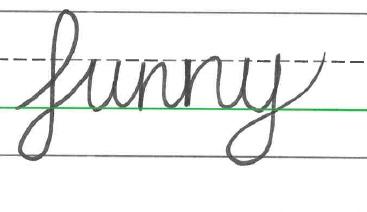
Q5.Which cursive letter joins are used in this letter string?
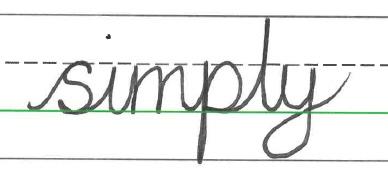
Q6.Select the true statements relating to this sentence.

To help you plan your 5 English lesson on: Practising handwriting in a non-chronological report, download all teaching resources for free and adapt to suit your pupils' needs...
To help you plan your 5 English lesson on: Practising handwriting in a non-chronological report, download all teaching resources for free and adapt to suit your pupils' needs.
The starter quiz will activate and check your pupils' prior knowledge, with versions available both with and without answers in PDF format.
We use learning cycles to break down learning into key concepts or ideas linked to the learning outcome. Each learning cycle features explanations with checks for understanding and practice tasks with feedback. All of this is found in our slide decks, ready for you to download and edit. The practice tasks are also available as printable worksheets and some lessons have additional materials with extra material you might need for teaching the lesson.
The assessment exit quiz will test your pupils' understanding of the key learning points.
Our video is a tool for planning, showing how other teachers might teach the lesson, offering helpful tips, modelled explanations and inspiration for your own delivery in the classroom. Plus, you can set it as homework or revision for pupils and keep their learning on track by sharing an online pupil version of this lesson.
Explore more key stage 2 English lessons from the Building handwriting fluency through speed, choices and writing dialogue unit, dive into the full primary English curriculum, or learn more about lesson planning.