


Researching Charles Darwin's theory of evolution



Lesson details
Learning outcome
I can explain the theory of evolution by natural selection, giving examples of how it has led to animals having certain characteristics.
Key learning points
- Darwin proposed the theory of evolution by natural selection to explain animals' adaptations.
- The theory is based on the idea that within a species, there are variations and competition.
- Within a habitat, some individuals will be better-adapted and others will be less-well-adapted.
- The better-adapted individuals are more likely to survive and reproduce, passing on these advantageous characteristics.
- Over a huge period of time, the advantageous characteristics become normal in the species (or can create a new species).
Keywords
Variations - differences between individuals in a particular species
Natural selection - theory that organisms with characteristics beneficial for living in a particular environment will pass on these characteristics to offspring
Offspring - the young of an animal
Evolution - the process by which living things change and develop over millions of years.
Common misconception
Pupils may believe that evolutionary changes happen rapidly.
Evolution is a process that occurs over huge periods of time.
Teacher tip
Show videos and pictures to support pupils' understanding of evolution by natural selection - particularly focusing on Darwin's finches if possible to support pupils' writing in subsequent lessons.

Licence

Lesson video
Loading...
Prior knowledge starter quiz
6 Questions
Q1.Which words best describe the tone of a biography?

Q2.Which of these facts link to the theme of Charles Darwin's early life?
Q3.What fact is represented by this image from the text map for Charles Darwin's life?

Q4.Which facts are represented by this image from the text map for Charles Darwin's life?
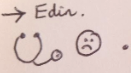
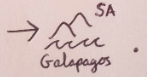
Q5.Which picture represents this fact? 'The Beagle visited the Galapagos Islands off the coast of South America.'
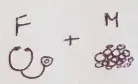
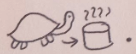
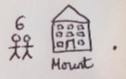
Q6.Which of the following would we not find in a text map?
Assessment exit quiz
6 Questions
Q1.Which theory is Darwin known for?
Q2.Which word describes the differences between individuals in a species?
Q3.Fill in the gaps: If an individual has variations that make them better-adapted to their environment, they are more likely to __________ and __________.
Q4.What did Darwin notice about the Galapagos finches?
Q5.Put the steps in order to explain how finches evolved larger beaks on some islands.
Q6.True or false? Animals make the decision to change their characteristics in order to be better-adapted to their environment.
To help you plan your 6 English lesson on: Researching Charles Darwin's theory of evolution, download all teaching resources for free and adapt to suit your pupils' needs...
To help you plan your 6 English lesson on: Researching Charles Darwin's theory of evolution, download all teaching resources for free and adapt to suit your pupils' needs.
The starter quiz will activate and check your pupils' prior knowledge, with versions available both with and without answers in PDF format.
We use learning cycles to break down learning into key concepts or ideas linked to the learning outcome. Each learning cycle features explanations with checks for understanding and practice tasks with feedback. All of this is found in our slide decks, ready for you to download and edit. The practice tasks are also available as printable worksheets and some lessons have additional materials with extra material you might need for teaching the lesson.
The assessment exit quiz will test your pupils' understanding of the key learning points.
Our video is a tool for planning, showing how other teachers might teach the lesson, offering helpful tips, modelled explanations and inspiration for your own delivery in the classroom. Plus, you can set it as homework or revision for pupils and keep their learning on track by sharing an online pupil version of this lesson.
Explore more key stage 2 English lessons from the Charles Darwin: biographical writing unit, dive into the full primary English curriculum, or learn more about lesson planning.