


Changes in small-scale ecosystems


Lesson details
Learning outcome
I can explain how natural changes and human activities affect the balance of small-scale ecosystems.
Key learning points
- Ecosystems are finely balanced and can be affected by changing one component.
- College Lake is the site of a range of small-scale ecosystems: lake, marshland and chalk grassland.
- Natural events as well as human actions can create changes that affect the complexity and productivity of ecosystems.
Keywords
Biotic - living components of an ecosystem, such as plants and animals
Abiotic - non-living components of an ecosystem such as soils and climate
Food web - a complex interconnection of food chains within an ecosystem
Habitat - the natural home or environment in which an animal or plant lives
Biodiversity - the variety of plants and animals in the world or in a particular habitat
Common misconception
Changes that affect ecosystems are always created by people.
Naturally-occurring events such as storms also affect ecosystems. For example, a storm could fell trees which may have been a habitat for other species.
Teacher tip
Avoid using the term 'man-made' and instead utilise the phrase 'created by/as a result of human activities'.

Licence

Lesson video
Loading...
Prior knowledge starter quiz
6 Questions
Q1.What is the use of light energy to make food called?

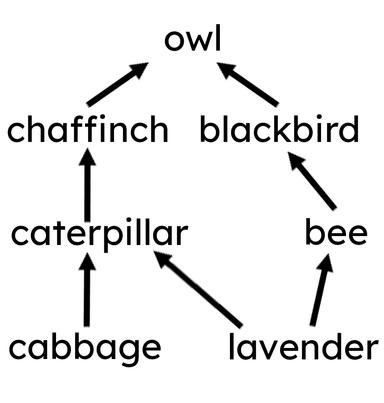
Q2.Identify the producer or producers in this food web.
Q3.Which of the following would be considered biotic?
Q4.Living organisms are one of the stores of nutrients within an ecosystem. What name is given to this store?
Q5.Which of the following are examples of losses of nutrients from an ecosystem?
Q6.Which of these is the best description of nutrient cycling?
Assessment exit quiz
6 Questions
Q1.An is a community of organisms (such as plants and animals) that interact with one another and their non-living environment.
Q2.If a disease meant that there were fewer oak trees, what might the likely impact be on the number of thrushes?
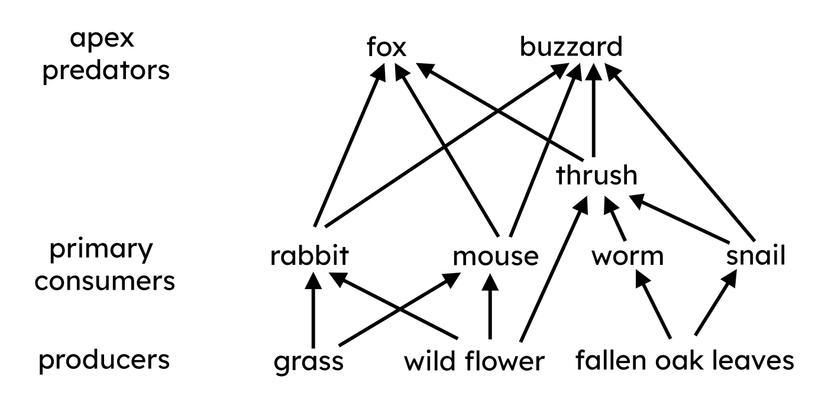
Q3.Identify the apex predators in this food web.

Q4.Put the stages of eutrophication in the correct order.
Q5.Which of the following agricultural practices can disrupt the balance within an ecosystem, rather than restoring it?
Q6.College Lake near Pitstone in Buckinghamshire, is a nature reserve that has developed on the site of a former chalk and cement works.
To help you plan your 10 geography lesson on: Changes in small-scale ecosystems, download all teaching resources for free and adapt to suit your pupils' needs...
To help you plan your 10 geography lesson on: Changes in small-scale ecosystems, download all teaching resources for free and adapt to suit your pupils' needs.
The starter quiz will activate and check your pupils' prior knowledge, with versions available both with and without answers in PDF format.
We use learning cycles to break down learning into key concepts or ideas linked to the learning outcome. Each learning cycle features explanations with checks for understanding and practice tasks with feedback. All of this is found in our slide decks, ready for you to download and edit. The practice tasks are also available as printable worksheets and some lessons have additional materials with extra material you might need for teaching the lesson.
The assessment exit quiz will test your pupils' understanding of the key learning points.
Our video is a tool for planning, showing how other teachers might teach the lesson, offering helpful tips, modelled explanations and inspiration for your own delivery in the classroom. Plus, you can set it as homework or revision for pupils and keep their learning on track by sharing an online pupil version of this lesson.
Explore more key stage 4 geography lessons from the Ecosystems, biomes and the biosphere unit, dive into the full secondary geography curriculum, or learn more about lesson planning.