


Joints and their movements


Lesson details
Learning outcome
I can describe the movements that occur at different types of joints.
Key learning points
- A hinge joint only allows flexion and extension to occur.
- A ball and socket joint allows all types of movement.
- Flexion and extension occur at the shoulder, elbow, hip and knee joints.
- Abduction and adduction occur at the shoulder and hip joints.
- Rotation and circumduction only occur at the shoulder, whilst plantar flexion and dorsiflexion only occur at the ankle.
Keywords
Flexion - a bending movement around a joint (decreasing the angle)
Extension - a straightening movement around a joint (increasing the angle)
Abduction - moving a limb away from the midline of the body
Adduction - moving a limb towards the midline of the body
Circumduction - moving a limb in a circular motion
Common misconception
Students may mix up rotation and circumduction.
When you rotate the shoulder joint, you draw a dot with your hand (if the elbow is fully extended) whereas circumduction draws a circle.
Teacher tip
Playing Simon Says to get pupils to act out the different movements at different joints is a great way to learn them kinaesthetically.

Licence

Lesson video
Loading...
Prior knowledge starter quiz
6 Questions
Q1.Which of the following is not an example of a hinge joint?
Q2.Which of the following is not a feature at synovial joints?
Q3.The joint capsule and ligaments help prevent ...
Q4.Which of the following statements correctly identifies the movements possible at a hinge joint?
Q5.A bone is a type of bone that provides protection for vital organs.
Q6.Match the following synovial joint features with their function.

Assessment exit quiz
6 Questions
Q1.Flexion and extension are the only movements possible at what type of joint?
Q2.Flexion, extension, abduction, adduction, rotation and circumduction are all movements possible at what sort of joints.
Q3.The type of movement being illustrated at the shoulder joint in the diagram is . This is where the arm moves up in front of the body.
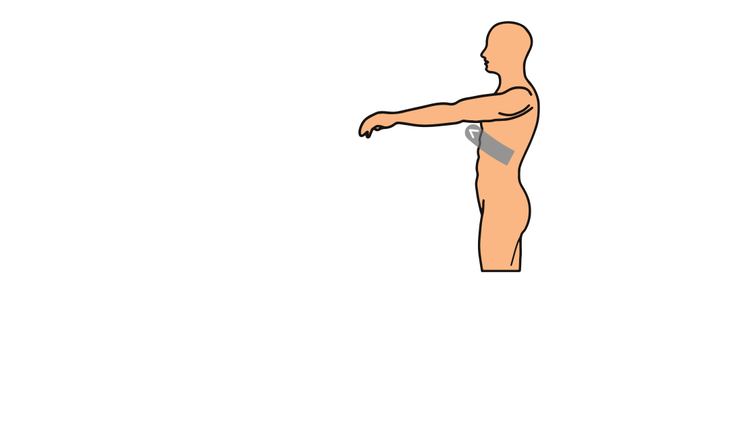
Q4.The type of movement being illustrated in the diagram is ...
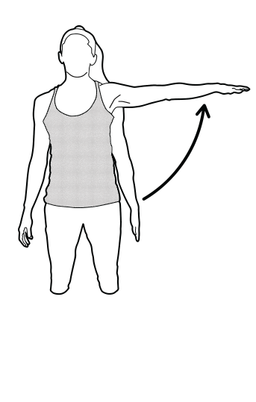
Q5.Match the following movement terminology with the correct sporting example.
Q6.Turning your head to the side to breath when swimming front crawl is known as ...
To help you plan your 10 physical education lesson on: Joints and their movements, download all teaching resources for free and adapt to suit your pupils' needs...
To help you plan your 10 physical education lesson on: Joints and their movements, download all teaching resources for free and adapt to suit your pupils' needs.
The starter quiz will activate and check your pupils' prior knowledge, with versions available both with and without answers in PDF format.
We use learning cycles to break down learning into key concepts or ideas linked to the learning outcome. Each learning cycle features explanations with checks for understanding and practice tasks with feedback. All of this is found in our slide decks, ready for you to download and edit. The practice tasks are also available as printable worksheets and some lessons have additional materials with extra material you might need for teaching the lesson.
The assessment exit quiz will test your pupils' understanding of the key learning points.
Our video is a tool for planning, showing how other teachers might teach the lesson, offering helpful tips, modelled explanations and inspiration for your own delivery in the classroom. Plus, you can set it as homework or revision for pupils and keep their learning on track by sharing an online pupil version of this lesson.
Explore more key stage 4 physical education lessons from the Anatomy and physiology: the musculoskeletal system unit, dive into the full secondary physical education curriculum, or learn more about lesson planning.