


Muscles and antagonistic pairs


Lesson details
Learning outcome
I can label the major muscles of the body and describe how antagonistic pairs work together to produce movement.
Key learning points
- The upper body contains muscles such as the deltiod, biceps, triceps, pectorals and abdominals and latissimus dorsi.
- The lower body contains muscles such as the gluteals, quadriceps, hamstrings and gastrocnemius.
- Muscles are attached to bones by tendons.
- Muscles contract and relax to move bones in antagonistic pairs.
- As one muscle contracts (agonist/prime mover), the other relaxes (antagonist).
Keywords
Agonist - the muscle, or group of muscles, that works to create the movement
Antagonist - the muscle that works in the opposite way of the agonist
Fixator - a muscle which acts as the stabiliser and helps the agonist work effectively
Antagonistic pair - a pair of muscles that work together to produce movement - one contracts whilst the other relaxes
Tendon - a tough yet flexible band of fibrous tissue tissue that attaches muscle to bone
Common misconception
Muscles can pull and push.
Muscles are only able to pull, they work in antagonistic pairs so one muscle can contract to create a movement whilst the other relaxes in opposition and then their roles are reversed to move back.
Teacher tip
Pairing up pupils to point at and contract different muscles as they are called out is a great way to learn their locations and movements they produce in a kinaesthetic way.

Licence

Lesson video
Loading...
Prior knowledge starter quiz
6 Questions
Q1.Which of the following is an example of a ball and socket joint?
Q2.Which of the following is not possible at the elbow joint?
Q3.When you increase the angle at a joint it is known as ...
Q4.Which of the following statements correctly identifies the movements possible at a ball and socket joint?
Q5.Movement away from the midline of the body is known as ...
Q6.Match the following synovial joint features with their function

Assessment exit quiz
6 Questions
Q1.Which connective tissue attaches muscle to bone?
Q2.Which muscle has been highlighted?
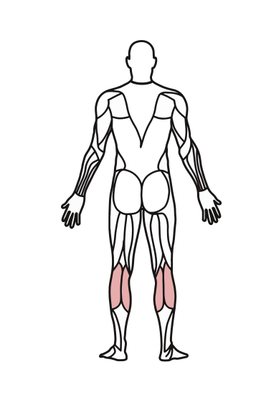
Q3.Which muscle has been highlighted?
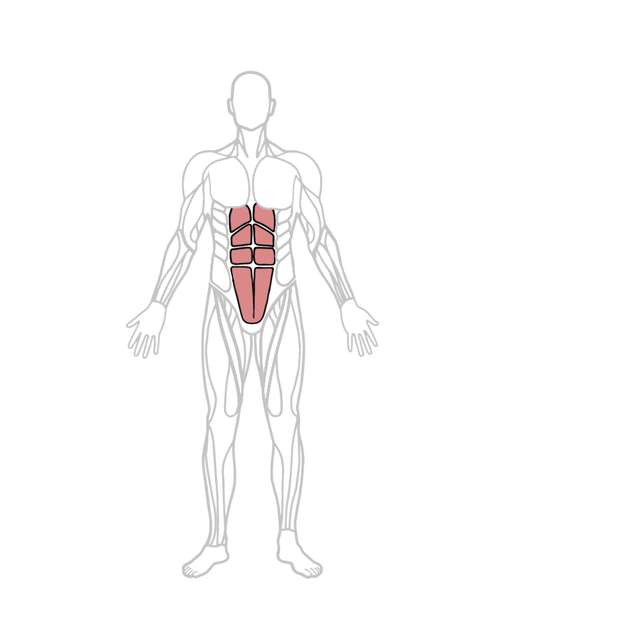
Q4.The biceps and triceps muscles are an example of an .
Q5.What do we call the contracting muscle in an antagonistic pair?
Q6.Which muscles work together in antagonistic pairs?
To help you plan your 10 physical education lesson on: Muscles and antagonistic pairs, download all teaching resources for free and adapt to suit your pupils' needs...
To help you plan your 10 physical education lesson on: Muscles and antagonistic pairs, download all teaching resources for free and adapt to suit your pupils' needs.
The starter quiz will activate and check your pupils' prior knowledge, with versions available both with and without answers in PDF format.
We use learning cycles to break down learning into key concepts or ideas linked to the learning outcome. Each learning cycle features explanations with checks for understanding and practice tasks with feedback. All of this is found in our slide decks, ready for you to download and edit. The practice tasks are also available as printable worksheets and some lessons have additional materials with extra material you might need for teaching the lesson.
The assessment exit quiz will test your pupils' understanding of the key learning points.
Our video is a tool for planning, showing how other teachers might teach the lesson, offering helpful tips, modelled explanations and inspiration for your own delivery in the classroom. Plus, you can set it as homework or revision for pupils and keep their learning on track by sharing an online pupil version of this lesson.
Explore more key stage 4 physical education lessons from the Anatomy and physiology: the musculoskeletal system unit, dive into the full secondary physical education curriculum, or learn more about lesson planning.