


Agility, balance and co-ordination


Lesson details
Learning outcome
I can define agility, balance and co-ordination, and consider the appropriate fitness test for each.
Key learning points
- Agility is being able to change direction at speed and is measured by the Illinois agility test.
- Balance is the ability to maintain the body's centre of mass over its base of support, assessed by the stork stand test.
- Co-ordination is the ability to use different body parts together, tested with the alternate hand wall toss.
Keywords
Agility - the ability to change direction at speed; nimbleness
Balance - the ability to stay upright or stay in control of body movement
Co-ordination - the ability to move two or more body parts under control, smoothly and efficiently
Common misconception
Thinking that balance is not important for games players and only useful in gymnastics.
Provide examples of when games players would need balance, e.g. a rugby player will need balance when kicking a conversion to provide greater accuracy.
Teacher tip
Link this to practical lessons where students can link components of fitness to different sports and also when they are able to practically complete the fitness tests.

Licence

Lesson video
Loading...
Prior knowledge starter quiz
6 Questions
Q1.What is stamina also known as?
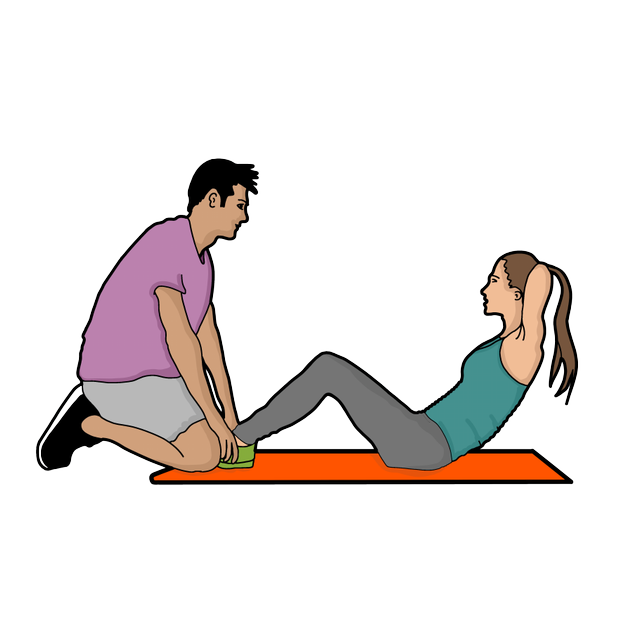
Q2.The image below shows a woman completing a fitness test. What component of fitness is she testing?
Q3.Identify the correct definition of speed.
Q4.Which components of fitness would be most beneficial to a long distance cyclist?
Q5.Match the component of fitness to the correct fitness test.

Q6.Match the components of fitness with their correct definition.
Assessment exit quiz
6 Questions
Q1.The ability to change direction at speed is the definition of which component of fitness?
Q2.The stand test measures balance.
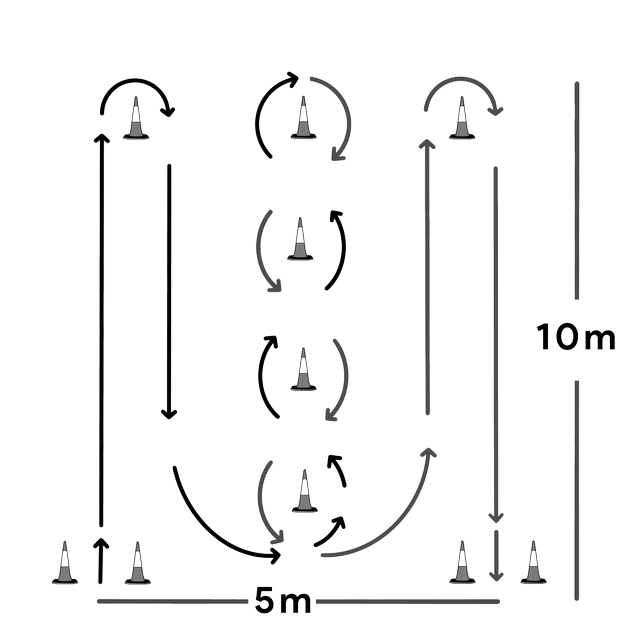
Q3.Below is an example of a fitness test. What component of fitness does this test measure?
Q4.Identify which athlete would not require agility.
Q5.Match the component of fitness to the correct definition.
Q6.Match the fitness test to the correct component of fitness.
To help you plan your 10 physical education lesson on: Agility, balance and co-ordination, download all teaching resources for free and adapt to suit your pupils' needs...
To help you plan your 10 physical education lesson on: Agility, balance and co-ordination, download all teaching resources for free and adapt to suit your pupils' needs.
The starter quiz will activate and check your pupils' prior knowledge, with versions available both with and without answers in PDF format.
We use learning cycles to break down learning into key concepts or ideas linked to the learning outcome. Each learning cycle features explanations with checks for understanding and practice tasks with feedback. All of this is found in our slide decks, ready for you to download and edit. The practice tasks are also available as printable worksheets and some lessons have additional materials with extra material you might need for teaching the lesson.
The assessment exit quiz will test your pupils' understanding of the key learning points.
Our video is a tool for planning, showing how other teachers might teach the lesson, offering helpful tips, modelled explanations and inspiration for your own delivery in the classroom. Plus, you can set it as homework or revision for pupils and keep their learning on track by sharing an online pupil version of this lesson.
Explore more key stage 4 physical education lessons from the Physical training: health and fitness unit, dive into the full secondary physical education curriculum, or learn more about lesson planning.