


Biomechanics


Lesson details
Learning outcome
I can calculate the moment of a force around a joint.
Key learning points
- A muscle attached to a bone exerts a force on the bone when the muscle contracts, which makes the bone move.
- Biomechanics is the study of this movement.
- A moment is the turning effect of the force when a bone pivots at a joint.
- The size of the moment when a bone pivots at a joint can be calculated.
Keywords
Muscle contraction - Muscle contraction is the shortening of muscles.
Force - A force is a push or a pull that acts on an object.
Biomechanics - Biomechanics is the study of how the body moves.
Moment - A moment is the turning effect of a force.
Pivot - The point around which an object can rotate is a pivot.
Common misconception
Pupils may not have encountered the moment equation in physics.
Pupils might need extra support substituting values into the equation.
Teacher tip
If making the model in learning cycle 1, string can be used to replace elastic bands and is sometimes easier to manage. Make a model first so that pupils can see what a good one looks like.

Equipment
Lolly sticks, elastic band/string, tape, tiny elastic bands/loom bands.

Content guidance
Risk assessment required - equipment

Supervision
Adult supervision required

Licence

Lesson video
Loading...
Prior knowledge starter quiz
6 Questions
Q1.What holds two bones together?

Q2.True or false? Cartilage is found between a joint to prevent bones from wearing away.
Q3.Who has the best description for how a muscle tissue moves bone?



Q4.Two muscles that work together to move a bone at the joint are known as pairs.
Q5.What is needed for respiration?
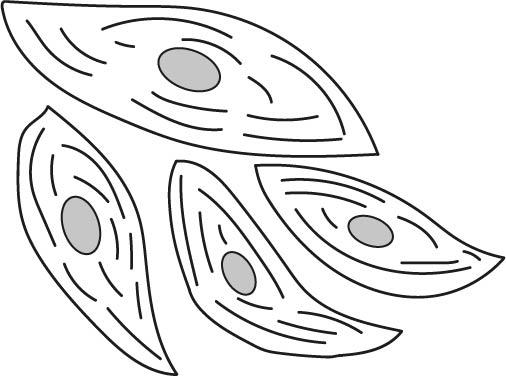
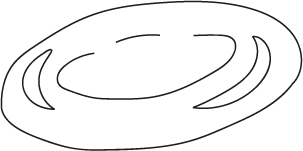
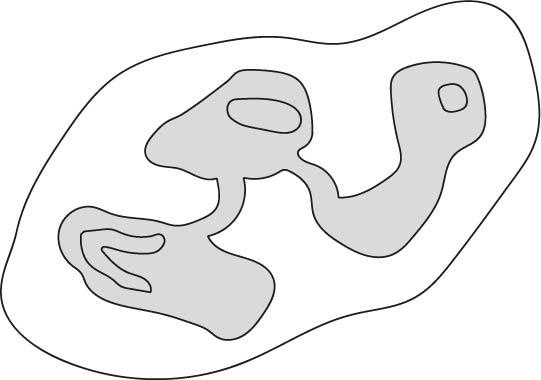
Q6.Which picture shows a muscle cell(s)?
Assessment exit quiz
6 Questions
Q1. is the study of how the body moves.
Q2.The bicep and tricep are an antagonistic pair of muscles. When the biceps contract the triceps...
Q3.True or false? The pivot in your arm is at the elbow.
Q4.Which units is a force measured in?
Q5.Who has the best description of a moment?

Q6.Calculate the moment when a boy with a forearm measuring 0.25 m holds a 2 N mass. The answer is Nm.
To help you plan your 7 science lesson on: Biomechanics, download all teaching resources for free and adapt to suit your pupils' needs...
To help you plan your 7 science lesson on: Biomechanics, download all teaching resources for free and adapt to suit your pupils' needs.
The starter quiz will activate and check your pupils' prior knowledge, with versions available both with and without answers in PDF format.
We use learning cycles to break down learning into key concepts or ideas linked to the learning outcome. Each learning cycle features explanations with checks for understanding and practice tasks with feedback. All of this is found in our slide decks, ready for you to download and edit. The practice tasks are also available as printable worksheets and some lessons have additional materials with extra material you might need for teaching the lesson.
The assessment exit quiz will test your pupils' understanding of the key learning points.
Our video is a tool for planning, showing how other teachers might teach the lesson, offering helpful tips, modelled explanations and inspiration for your own delivery in the classroom. Plus, you can set it as homework or revision for pupils and keep their learning on track by sharing an online pupil version of this lesson.
Explore more key stage 3 science lessons from the Human skeleton and muscles unit, dive into the full secondary science curriculum, or learn more about lesson planning.