



Categories

Lesson planning
20 April 2026Classroom as gallery: a collaboration with October Gallery

Emily Gopaul
Art and design subject lead
In many art lessons, the interactive whiteboard becomes a kind of mini exhibition space. Teachers use it not just to show slides, but to project artworks at scale, allowing pupils to observe closely, notice fine details, and discuss what they see together. Whether looking at their own work, that of their peers, or the work of artists, craftspeople and designers, the visual material pupils encounter in our lessons is treated with the same care and attention.
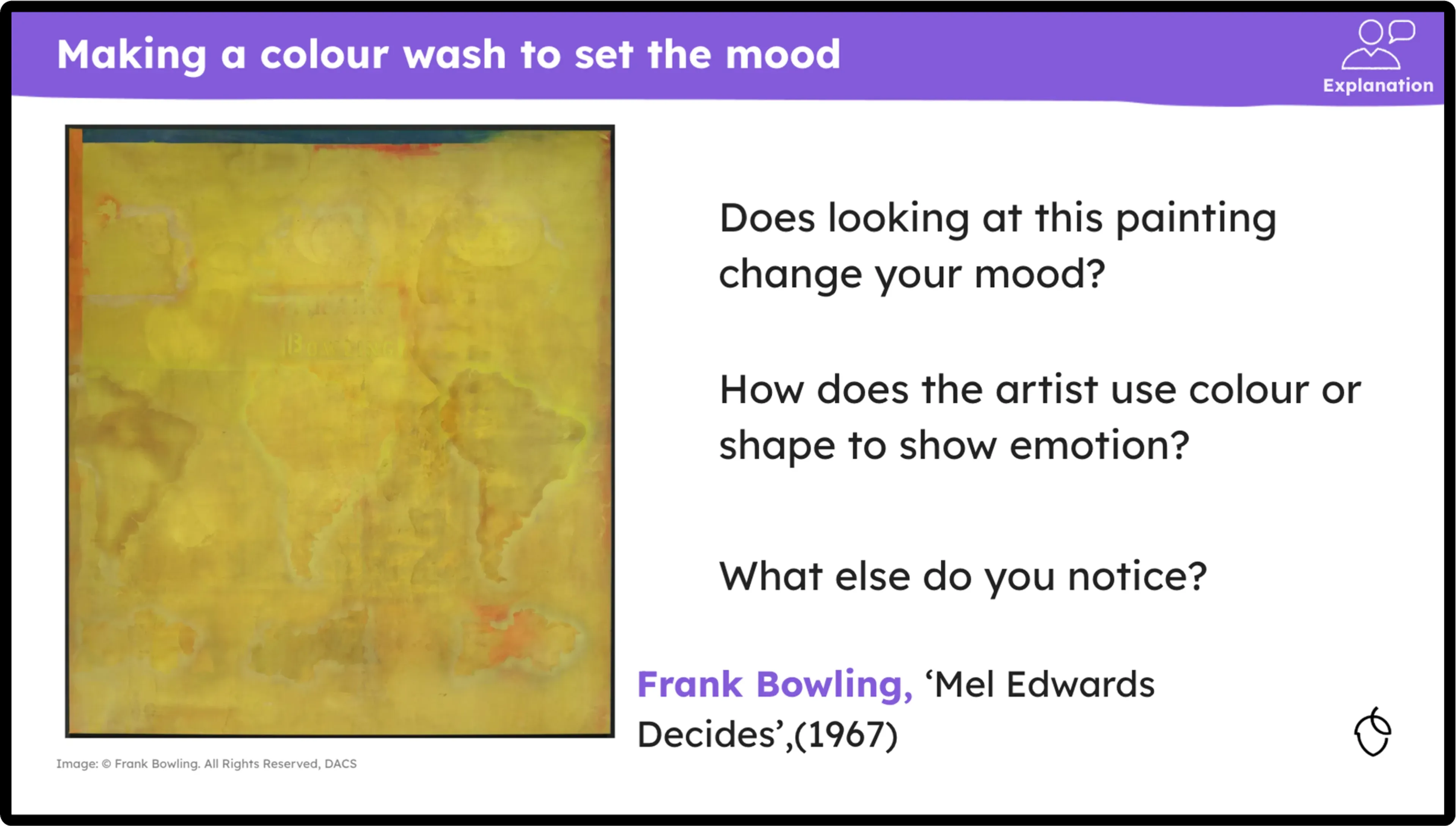
Slide from art lesson resources in the year 6 unit 'Charting self: exploring portrait and identity' featuring artist Frank Bowling
Across our KS1 and KS2 art and design curriculum and at different points in individual lessons and units, we have made it easier for you to introduce your pupils to a wide range of art, craft and design from around the world – so you can help them to engage with, reflect on, and be inspired by this rich variety of art.
Being able to enlarge textures, marks, materials and processes on the board allows your pupils to engage in careful looking and shared interpretation, much like they might when standing in front of an artwork. These moments of collective viewing help pupils practise observation, curiosity and visual thinking, while developing oracy as they articulate their interpretations and build confidence to talk about art, deepening their understanding of how artists communicate ideas through materials and form.
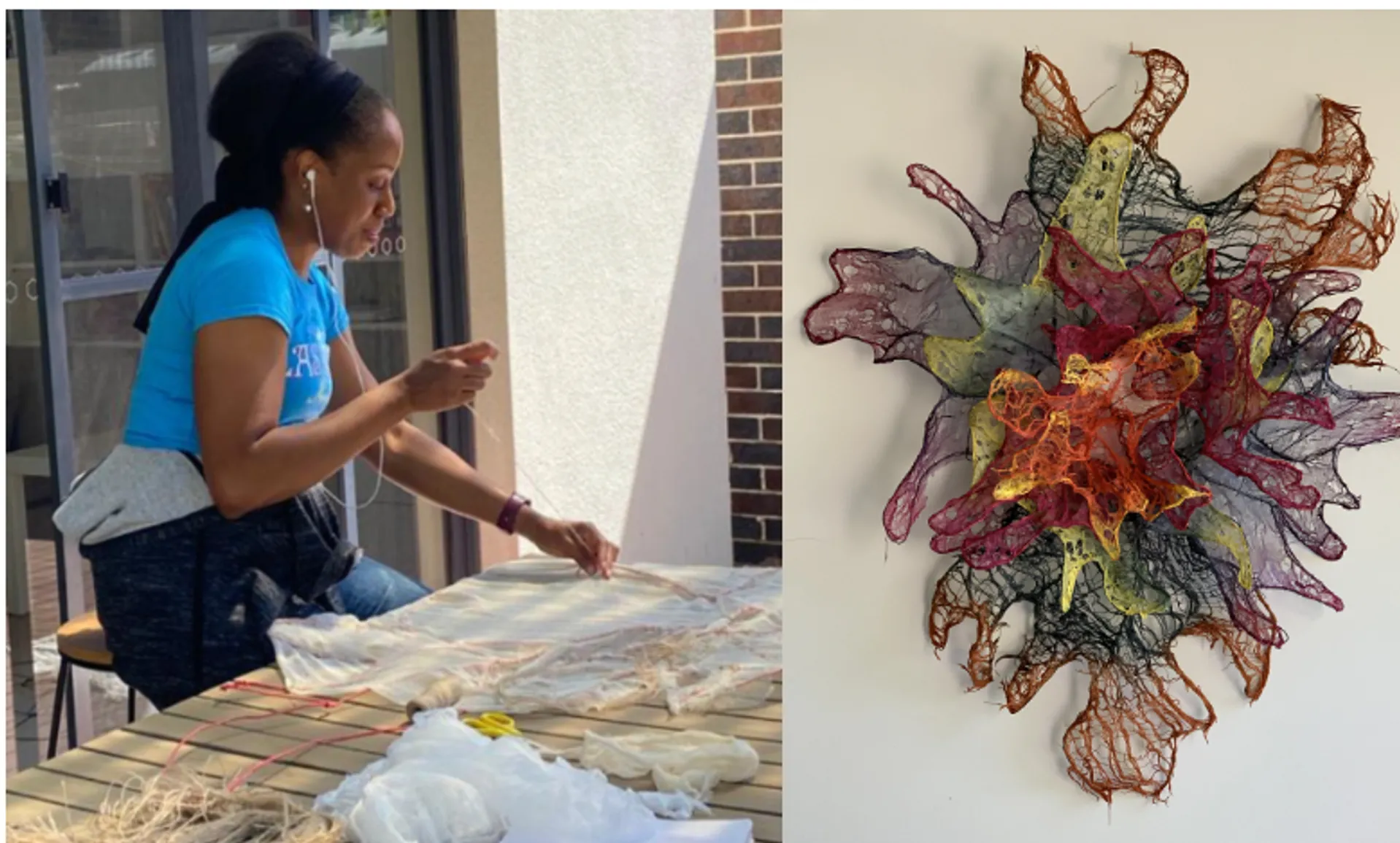
Artist Nnenna Okore. Featured in the year 5 unit: 'Unweaving, wrapping, transforming: textile sculpture'.
Discover the latest art and design units
We are pleased to launch our six new primary art units, developed in partnership with Esther Adesigbin from the education team at October Gallery.
The new units build on this approach, extending these practices through direct engagement with contemporary gallery approaches, perspectives and artists. They offer further opportunities for your pupils to experience the classroom as a space for thoughtful viewing, discussion, and the development of oracy alongside artistic exploration.
Working closely with a gallery rooted in global voices and how art connects to people’s lives has enabled us to design lessons that reflect how art operates in the world, as a form of expression, storytelling, memory, identity and connection.
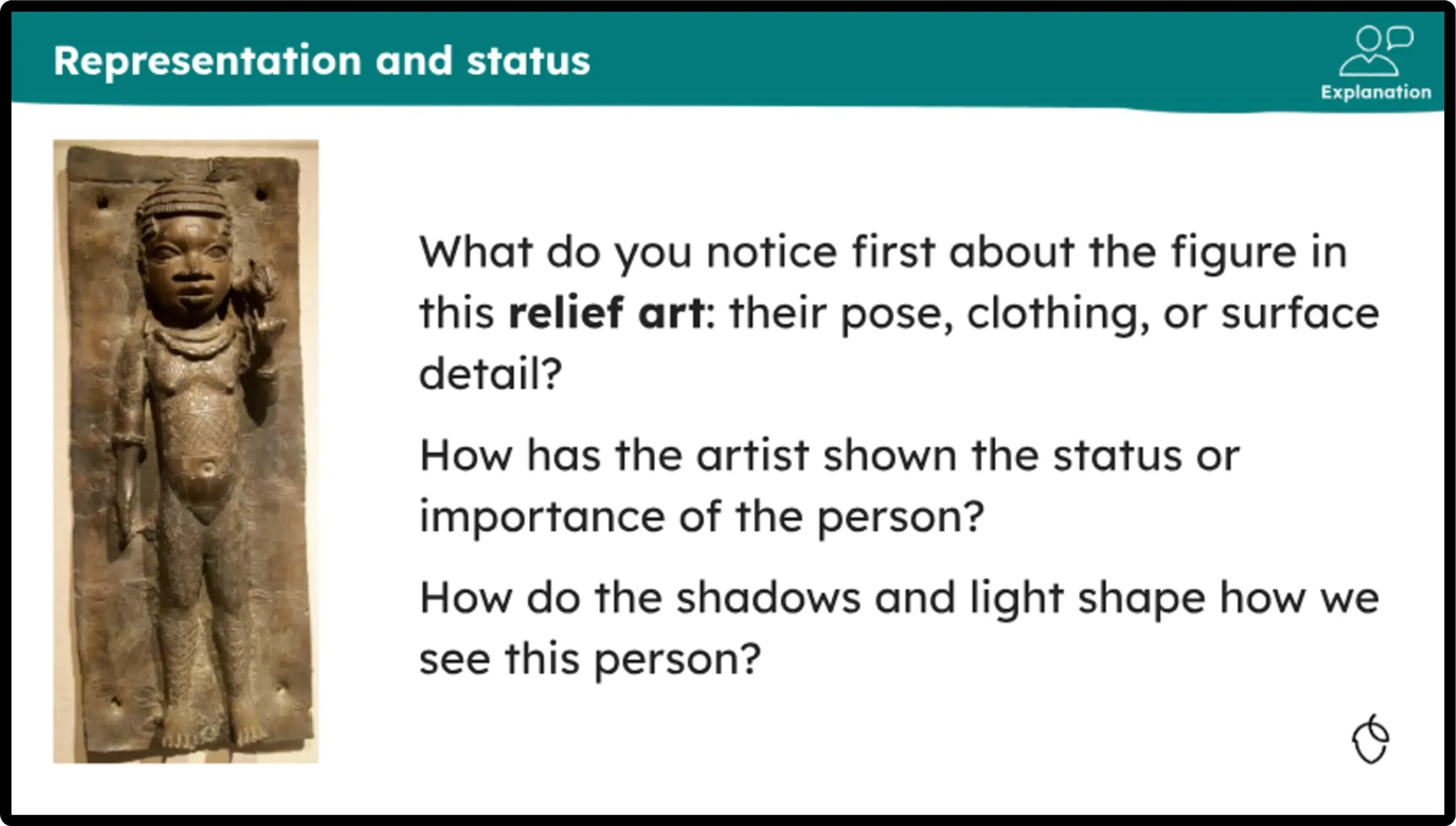
Lesson resource from 'Raised portraits: representation through dots and relief'. From unit: 'Elevating the Ordinary Charting Self Exploring Portrait and Identity'.
Why October Gallery?
October Gallery has long championed artists whose work speaks across cultures, histories and lived experiences. Working with Esther brought deep insight into how artists think, work and communicate, and how meaning is made and conveyed through process, materials, collaboration and context. This shaped every stage of unit design, ensuring that classroom practice reflects authentic artistic ways of working while remaining accessible, inclusive and practical for any primary setting.
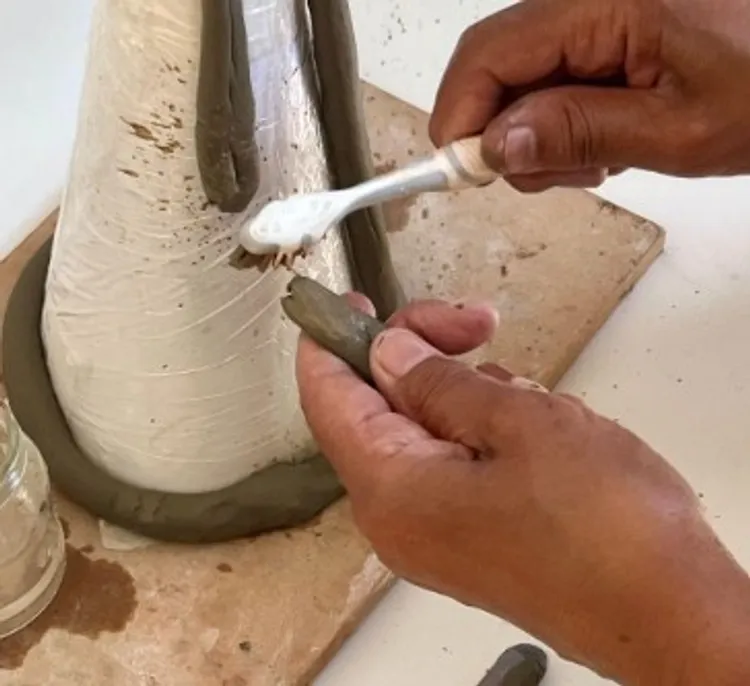
Image in the year 3 lesson resources:'Clay landscapes: hand building towers together'. From unit: 'Imagined spaces and shared stories'.
Esther Adesigbin reflects on the thinking behind the collaboration:
“At the heart of this collaboration are the artists and the distinctive ways of making and thinking their practices embody, that shape how we understand art across time and place. My own journey has been deeply influenced not only by artists’ voices, but by observing how they work: how materials are tested, layered, unpicked and transformed to hold memory, identity and social meaning.
"Over ten years in primary education, I’ve developed practical, enjoyable approaches to material making that remain accessible while still carrying conceptual depth. It was important that these units honoured both the artists and their processes, translating authentic ways of working into classroom experiences teachers can confidently use.
"What felt particularly unique about collaborating with Oak and NSEAD was their commitment to placing teachers and pupils – the users of the shared lessons – at the centre of the process. Together, we hope we have created pathways where thinking and making sit side by side, and where art becomes a language for understanding ourselves, each other and the wider world.”
Inspire your pupils
Across key stages 1 and 2, these units help you to shape the way your pupils encounter art – as something that:
- Expresses identity and belonging
- Responds to place, movement and journeys
- Communicates ideas about fairness, change and community
- Holds memory, emotion and story.
Your pupils will work with a range of exciting materials and techniques, including clay, textiles, print, charcoal, installation, dye and collage. They develop technical skills alongside creative confidence, cultural awareness and conceptual understanding. From mapping memory through mark-making, to wearable sculpture and expressive portraiture, pupils explore how materials can carry meaning as well as form.
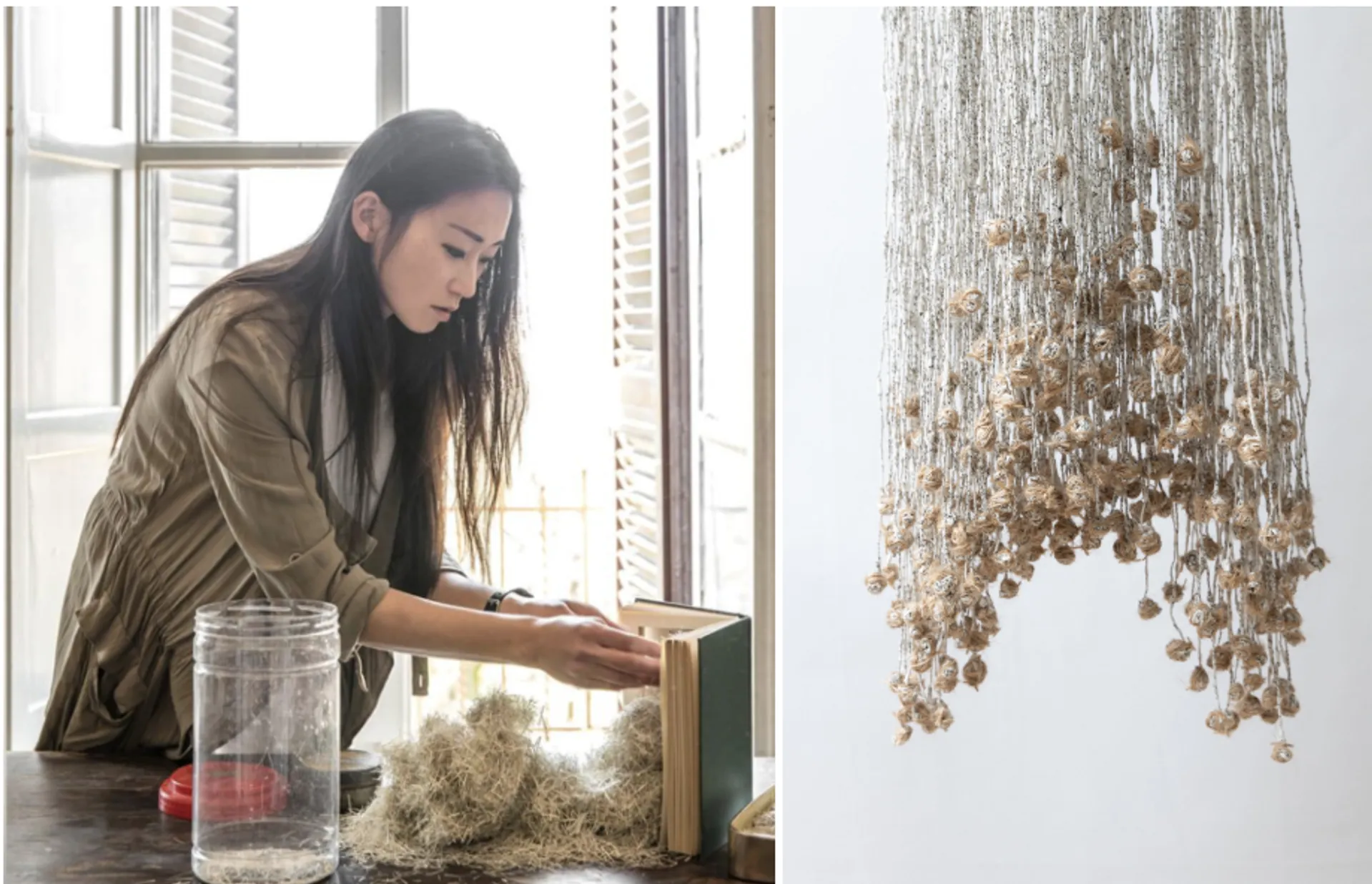
Artist Jukhee Kwon. Featured in year 2 unit: 'Art that travels: stories, land and journeys'.
We’re extremely proud of what this collaboration has produced and excited to see how schools bring these units to life in classrooms.