New
New
Multiply a 2-digit number by a 1-digit number using expanded multiplication (no regroups)
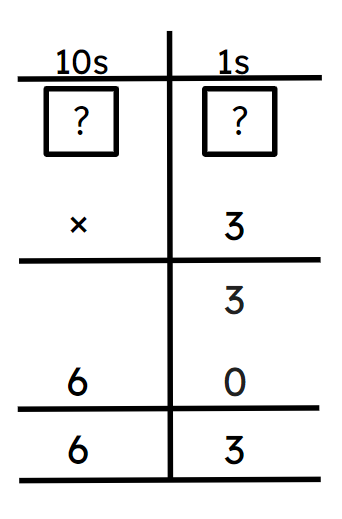
I can represent partitioning in a column method for expanded multiplication.


Lesson 4 of 10
New
New
- Year 5
Multiply a 2-digit number by a 1-digit number using expanded multiplication (no regroups)
I can represent partitioning in a column method for expanded multiplication.
Lesson details
Key learning points
- Knowledge of times tables and place value helps when multiplying 2-digit numbers.
- There are similarities between the representations of multiplication.
- Arranging the factors in columns allows you to organise the partial products into a column addition.
Keywords
Expanded multiplication - A way of recording the steps of a calculation focusing on partitioning one or more factors and showing partial products.
Partial product - Any of the multiplication results that lead up to an overall multiplication result.
Common misconception
When using the expanded method, pupils may not align the digits correctly with the same place value.
Use clear teacher modelling and continue to ask what each digit that has been recorded represents and link back to the place value chart.
When modelling expanded multiplication, encourage children to use the stem sentences when laying out their equations.

Teacher tip

Licence
This content is © Oak National Academy Limited (2025), licensed on Open Government Licence version 3.0 except where otherwise stated. See Oak's terms & conditions (Collection 2).
Lesson video
Loading...
Prior knowledge starter quiz
6 Questions
Q1.Look at the multiplication equation. You can partition 17 into 10 and .
Look at the multiplication equation. You can partition 17 into 10 and .
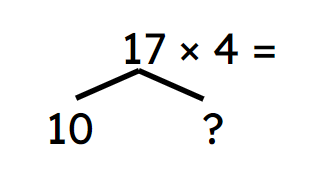
Q2.Look at the image. Complete the equation.
Look at the image. Complete the equation.
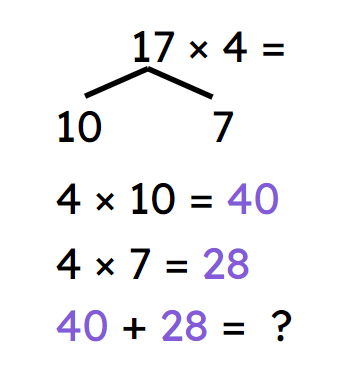
Q3.Select the correct partial product pair that completes the model in the image.
Select the correct partial product pair that completes the model in the image.
10 + 80
8 + 10
10 + 8
Q4.Select the correct partial product sums for this multiplication equation: 35 × 3
Select the correct partial product sums for this multiplication equation: 35 × 3
90 + 10 + 5
15 + 45 + 45
9 + 15
Q5.Match the multiplication equation with the correct partial product pair.
Match the multiplication equation with the correct partial product pair.

Q6.Which multiplication equations consist of zero regroups?
Which multiplication equations consist of zero regroups?
34 × 4
4 × 47
Assessment exit quiz
6 Questions
Q1.Sofia is chanting her 4 times tables. 4, 8, 12, What comes next?
Sofia is chanting her 4 times tables. 4, 8, 12, What comes next?
14
18
20
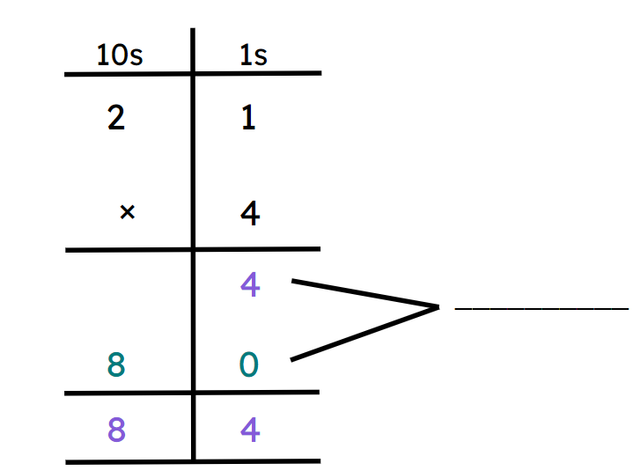
Q2.Look at the image. Which word is the correct label?
Look at the image. Which word is the correct label?
factor
product
addends
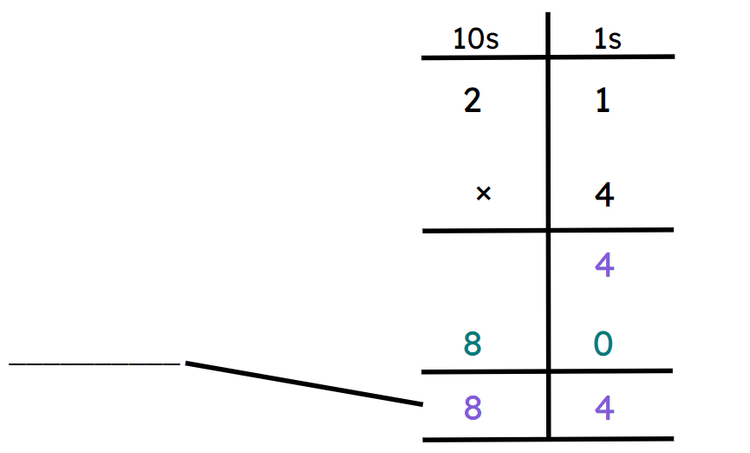
Q3.Look at the image and the missing label. In a multiplication equation this number is known as the .
Look at the image and the missing label. In a multiplication equation this number is known as the .
Q4.Using short multiplication calculate: 23 × 3
Using short multiplication calculate: 23 × 3
Q5.Using short multiplication calculate: 43 × 2
Using short multiplication calculate: 43 × 2
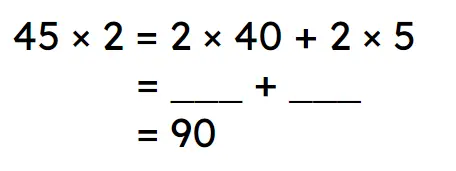
Q6.What is the missing factor in this expanded multiplication example?
What is the missing factor in this expanded multiplication example?