


How does the media support democracy?


Lesson details
Learning outcome
I can explain a variety of ways in which the media can support democracy.
Key learning points
- Democratic values include transparency, participation, effectively functioning government, trust and liberties.
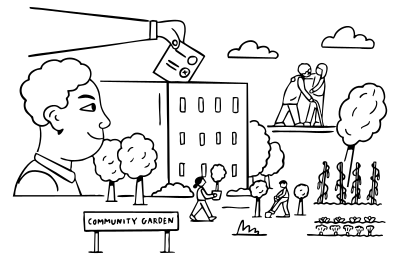
- The media supports democratic values by providing a free press so we can be kept up to date and make informed decisions.
- Media holds politicians to account via interviews, debates, viewer engagement, investigative journalism and reporting.
Keywords
Values - core beliefs or principles that guide how individuals or societies think and act
Democratic - describing a system of government in which citizens vote in regular, fair elections for representatives who then make laws and decisions on their behalf
Liberties - fundamental rights and freedoms that protect individuals from excessive government control
Scandal - a situation or event that is seen as shocking or disgraceful because of wrongdoing or improper behaviour
Common misconception
There are limits to what the media can print about the Government.
As long as the media is following regulations, they have the freedom to print what they like, even if this is negative towards the Government.
Teacher tip
Watch an example of a televised election debate or politician interviews to emphasise the power of the media in a democracy.

Licence

Lesson video
Loading...
Prior knowledge starter quiz
6 Questions
Q1.What does the following describe? Media that is not controlled by the Government.
Q2.Complete the sentence: Representative democracy is when citizens can ...
Q3.Which of these statements is true?
Q4.Why is this statement false? 'Journalists can print whatever they want!'
Q5.What scandal did the media uncover relating to MPs and the money they were spending: 'The MP Scandal'?
Q6.Match the media source to the media type.

Assessment exit quiz
6 Questions
Q1.Core beliefs or principles that guide how individuals or societies think and act are known as what?
Q2.Fundamental rights and freedoms that protect individuals from excessive government control are known as what?
Q3.Which is an example of political participation?
Q4.Complete the sentence, free press is when the media is free from government ...
Q5.What is the name of the popular investigative TV series that uncovers social issues?
Q6.How much citizens value and trust a political system is referred to as what?
To help you plan your 10 citizenship lesson on: How does the media support democracy?, download all teaching resources for free and adapt to suit your pupils' needs...
To help you plan your 10 citizenship lesson on: How does the media support democracy?, download all teaching resources for free and adapt to suit your pupils' needs.
The starter quiz will activate and check your pupils' prior knowledge, with versions available both with and without answers in PDF format.
We use learning cycles to break down learning into key concepts or ideas linked to the learning outcome. Each learning cycle features explanations with checks for understanding and practice tasks with feedback. All of this is found in our slide decks, ready for you to download and edit. The practice tasks are also available as printable worksheets and some lessons have additional materials with extra material you might need for teaching the lesson.
The assessment exit quiz will test your pupils' understanding of the key learning points.
Our video is a tool for planning, showing how other teachers might teach the lesson, offering helpful tips, modelled explanations and inspiration for your own delivery in the classroom. Plus, you can set it as homework or revision for pupils and keep their learning on track by sharing an online pupil version of this lesson.
Explore more key stage 4 citizenship lessons from the How does the media hold those in power to account? unit, dive into the full secondary citizenship curriculum, or learn more about lesson planning.