


What are changemakers?
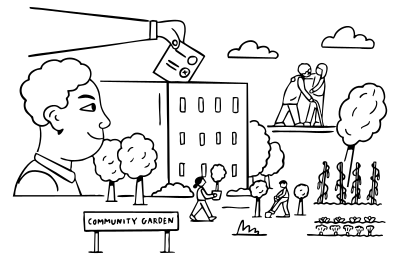


Lesson details
Learning outcome
I can describe what a changemaker is and explain examples of the positive changes that people have made.
Key learning points
- Ordinary citizens can play a part in positive change.
- Change can take time and it can have a local, national or international impact.
- To create our own change, we need to be active citizens.
Keywords
Change - making something different; altering or modifying something
Changemakers - someone who wants to change the world and, by gathering knowledge, skills and resources brings about change through their deliberate actions
Active citizenship - the process of learning how to take part in democracy and use Citizenship knowledge, skills and understanding to work together and try to make a positive difference in the world
Common misconception
That changemakers are connected or influential people with lots of resources.
Anyone can be a changemaker. It depends on the ability of the person to bring people along with them and build a cause people believe in.
Teacher tip
Encourage pupils to connect the lesson to their own experiences by asking about causes they care about. Use examples like Amika George’s campaign to show how ordinary people can drive change, then discuss different methods (petitions, social media, etc.) to match actions with goals.

Content guidance
Depiction or discussion of sensitive content
Depiction or discussion of serious crime
Depiction or discussion of serious crime

Supervision
Adult supervision required

Licence

Lesson video
Loading...
Prior knowledge starter quiz
6 Questions
Q1.Match the word to its correct definition.

Q2.What year was Magna Carta signed?
Q3.Which of the following was signed in 1998?
Q4.Which freedom allows people to gather to take part in protests?
Q5.When was the Universal Declaration of Human Rights agreed by the United Nations?
Q6.Which of the following statements is true about the impact of protests?
Assessment exit quiz
6 Questions
Q1.Match the word to the correct definition.
Q2.Which Act did the women of Dagenham Ford Factory help secure through their campaign?
Q3.Which of the following is a quality of a changemaker who is likely to be successful in their attempt to make a positive change?
Q4.What did Amika George change?
Q5.What campaign tool did Amika George use in addition to a petition?
Q6.Which of the following statements are true? A changemaker must be ...
To help you plan your 11 citizenship lesson on: What are changemakers?, download all teaching resources for free and adapt to suit your pupils' needs...
To help you plan your 11 citizenship lesson on: What are changemakers?, download all teaching resources for free and adapt to suit your pupils' needs.
The starter quiz will activate and check your pupils' prior knowledge, with versions available both with and without answers in PDF format.
We use learning cycles to break down learning into key concepts or ideas linked to the learning outcome. Each learning cycle features explanations with checks for understanding and practice tasks with feedback. All of this is found in our slide decks, ready for you to download and edit. The practice tasks are also available as printable worksheets and some lessons have additional materials with extra material you might need for teaching the lesson.
The assessment exit quiz will test your pupils' understanding of the key learning points.
Our video is a tool for planning, showing how other teachers might teach the lesson, offering helpful tips, modelled explanations and inspiration for your own delivery in the classroom. Plus, you can set it as homework or revision for pupils and keep their learning on track by sharing an online pupil version of this lesson.
Explore more key stage 4 citizenship lessons from the Why do we need the right to protest in a democracy? unit, dive into the full secondary citizenship curriculum, or learn more about lesson planning.