


Macronutrients, fibre and water


Lesson details
Learning outcome
I can explain why macronutrients, fibre and water are needed for health.
Key learning points
- Food and drinks provide energy and nutrients in different amounts, and have important functions for health.
- Carbohydrate, protein and fat are macronutrients and have different functions and sources. They provide energy.
- To maintain body weight we need to balance energy intake (from food and drink) with energy expenditure (from activity).
- Fibre is needed to keep our digestive system healthy. It is important to eat a variety of fibre-containing foods.
- We need water for a variety of functions, such as regulating body temperature and being physically active.
Keywords
Energy - derived from chemical combustion of food and required for us to stay alive and function
Macronutrients - nutrients the human body needs in larger amounts, and provide energy: fat, protein and carbohydrate
Fibre - carbohydrates found typically in plant foods that are resistant to digestion
Water - a colourless and odourless liquid, the basis of fluids in living organisms
Common misconception
We should eat less starchy foods, as these are 'fattening' in the diet and provide little else.
Starchy foods should make up just over a third of the diet, as they are an important source of energy, fibre and micronutrients.
Teacher tip
Use food and cooking examples to bring macronutrients, fibre and water to life. For example: show food examples of the macronutrients and talk about how we consume these everyday; use food packaging to review fat and fibre provided by a range of foods; keep drinking diaries.

Licence

Lesson video
Loading...
Prior knowledge starter quiz
6 Questions
Q1.Match these food items to the correct Eatwell Guide food group.
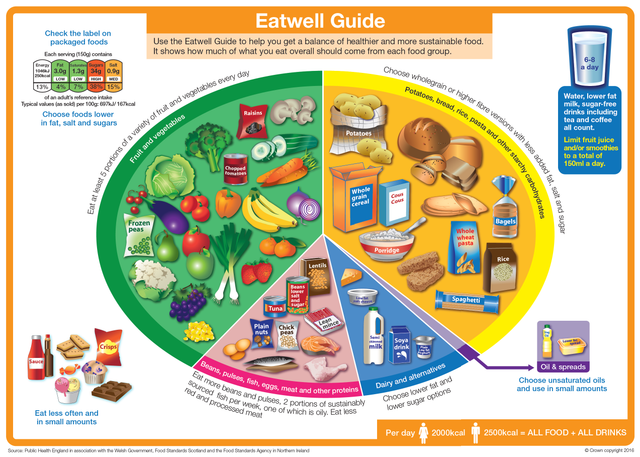

Q2.Which of these is not healthy eating advice?
Q3.Starting from the largest, place these Eatwell Guide food groups in order of size.
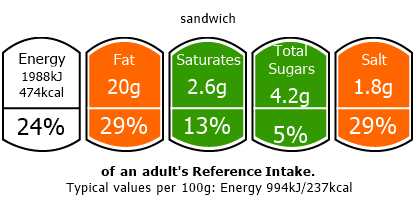
Q4.Food labels often use the colours of a traffic light to indicate the amounts of fat, salt and sugars. The colour __________ indicates that the food is a healthier choice.
Q5.Match the following food to their source.
Q6.Carbohydrate, protein and fat are known as ...
Assessment exit quiz
6 Questions
Q1.Which of these are macronutrients?
Q2.True or false? We should eat less starchy foods, as these are 'fattening' in the diet and provide little else.
Q3.On average, we are recommended to drink __________ glasses of fluid a day to prevent dehydration.
Q4.Fibre helps to keep our system healthy and can help to prevent constipation.
Q5.When energy intake is lower than energy output …
Q6.Match the following proteins and fats to food sources:
To help you plan your 8 cooking and nutrition lesson on: Macronutrients, fibre and water, download all teaching resources for free and adapt to suit your pupils' needs...
To help you plan your 8 cooking and nutrition lesson on: Macronutrients, fibre and water, download all teaching resources for free and adapt to suit your pupils' needs.
The starter quiz will activate and check your pupils' prior knowledge, with versions available both with and without answers in PDF format.
We use learning cycles to break down learning into key concepts or ideas linked to the learning outcome. Each learning cycle features explanations with checks for understanding and practice tasks with feedback. All of this is found in our slide decks, ready for you to download and edit. The practice tasks are also available as printable worksheets and some lessons have additional materials with extra material you might need for teaching the lesson.
The assessment exit quiz will test your pupils' understanding of the key learning points.
Our video is a tool for planning, showing how other teachers might teach the lesson, offering helpful tips, modelled explanations and inspiration for your own delivery in the classroom. Plus, you can set it as homework or revision for pupils and keep their learning on track by sharing an online pupil version of this lesson.
Explore more key stage 3 cooking and nutrition lessons from the Energy and nutrients: source and function unit, dive into the full secondary cooking and nutrition curriculum, or learn more about lesson planning.