


Preparing to write a poem about big objects



Lesson details
Learning outcome
I can prepare to write a poem about a big object.
Key learning points
- A synonym is a word that has the same or similar meaning to another word.
- Synonyms for ‘big’ include: huge, colossal and gargantuan.
- The subject of a poem is what the poem is about.
- Poems can provoke emotions and engage our senses.
Keywords
Inspiring - something or someone that is exciting and makes you feel strongly interested and enthusiastic
Synonym - a word that has the same or similar meaning to another word
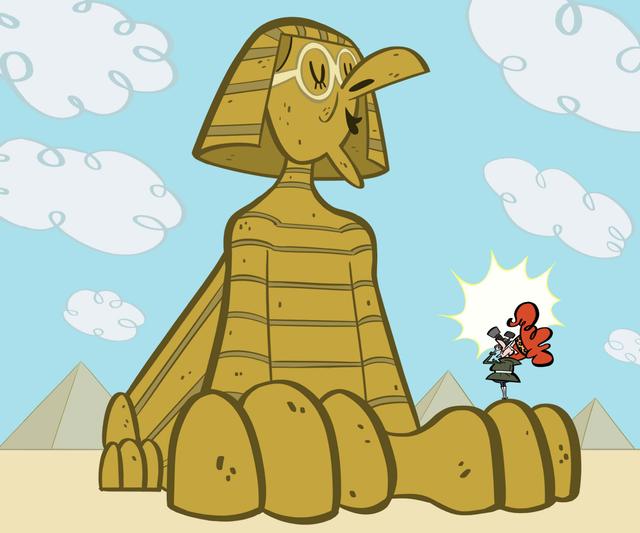
Colossal - an adjective which means massive or gigantic; like a huge statue that makes you feel tiny in comparison
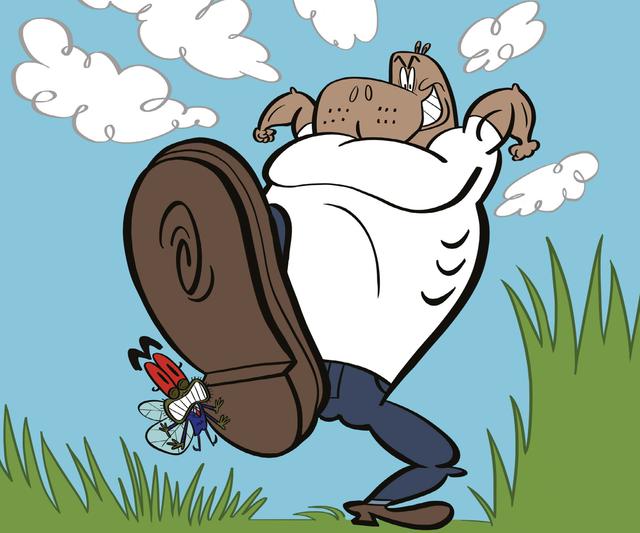
Gargantuan - an adjective which means huge or enormous; like a giant who towers above you in the air
Common misconception
Pupils may find it challenging to choose appropriate synonyms for the precise context in LC2.
Allow children to work in pairs or small groups to generate ideas. Mind map some more synonyms together as a class before they complete the task.
Teacher tip
It would be beneficial to have completed the Y3 Mrs Wordsmith vocabulary unit on 'big words' ahead of this lesson, to support children with generating vocabulary.

Licence

Lesson video
Loading...
Prior knowledge starter quiz
6 Questions
Q1.What is the name for a two word phrase that can be used to replace a noun and is often used in poetry?

Q2.Which of these is an example of a correctly-written kenning describing a fish?
Q3.Which of these kennings could be used to refer to a skyscraper?
Q4.A kenning poem consists of a list of ...
Q5.How long does a kenning poem need to be?
Q6.Which of these kennings could be used to refer to a chicken?
Assessment exit quiz
6 Questions
Q1.A haiku is a poem of how many lines?
Q2.Kenning poems are just like .
Q3.True or false? Free verse poems follow a strict set of rules.
Q4.What is the name for a word that has the same or similar meaning to another word?
Q5.What adjective does this image represent?
Q6.What adjective does this image represent?
To help you plan your 3 English lesson on: Preparing to write a poem about big objects, download all teaching resources for free and adapt to suit your pupils' needs...
To help you plan your 3 English lesson on: Preparing to write a poem about big objects, download all teaching resources for free and adapt to suit your pupils' needs.
The starter quiz will activate and check your pupils' prior knowledge, with versions available both with and without answers in PDF format.
We use learning cycles to break down learning into key concepts or ideas linked to the learning outcome. Each learning cycle features explanations with checks for understanding and practice tasks with feedback. All of this is found in our slide decks, ready for you to download and edit. The practice tasks are also available as printable worksheets and some lessons have additional materials with extra material you might need for teaching the lesson.
The assessment exit quiz will test your pupils' understanding of the key learning points.
Our video is a tool for planning, showing how other teachers might teach the lesson, offering helpful tips, modelled explanations and inspiration for your own delivery in the classroom. Plus, you can set it as homework or revision for pupils and keep their learning on track by sharing an online pupil version of this lesson.
Explore more key stage 2 English lessons from the Poetry inspired by big and small objects: understanding form unit, dive into the full primary English curriculum, or learn more about lesson planning.