Myths about teaching can hold you back
- Year 11•
- Higher
Checking and securing understanding of volume of prisms
I can calculate the volume of prisms.
- Year 11•
- Higher
Checking and securing understanding of volume of prisms
I can calculate the volume of prisms.
Lesson details
Key learning points
- The shape and area of the base of a prism can be found.
- The area of the cross-section multiplied by the length gives the volume of the prism.
- This can be used to find the volume of any prism.
- Unknown lengths can be found when the volume of a prism is known.
Keywords
Volume - Volume is the amount of space occupied by a closed 3D shape.
Prism - A prism is a polyhedron with a base that is a polygon and a parallel opposite face that is identical. The corresponding edges of the two polygons are joined by parallelograms.
Common misconception
When questions are in context, the length may be described as the depth or height and this can cause some pupils to struggle if they have learned a formula with a particular word.
Remind pupils that the volume of a 3D shape comes from a product of three perpendicular lengths. The cross-sectional area uses two of the three, so identify the distance that is perpendicular to the cross-sectional face.
To help you plan your year 11 maths lesson on: Checking and securing understanding of volume of prisms, download all teaching resources for free and adapt to suit your pupils' needs...
To help you plan your year 11 maths lesson on: Checking and securing understanding of volume of prisms, download all teaching resources for free and adapt to suit your pupils' needs.
The starter quiz will activate and check your pupils' prior knowledge, with versions available both with and without answers in PDF format.
We use learning cycles to break down learning into key concepts or ideas linked to the learning outcome. Each learning cycle features explanations with checks for understanding and practice tasks with feedback. All of this is found in our slide decks, ready for you to download and edit. The practice tasks are also available as printable worksheets and some lessons have additional materials with extra material you might need for teaching the lesson.
The assessment exit quiz will test your pupils' understanding of the key learning points.
Our video is a tool for planning, showing how other teachers might teach the lesson, offering helpful tips, modelled explanations and inspiration for your own delivery in the classroom. Plus, you can set it as homework or revision for pupils and keep their learning on track by sharing an online pupil version of this lesson.
Explore more key stage 4 maths lessons from the 2D and 3D shape: surface area and volume (pyramids, spheres and cones) unit, dive into the full secondary maths curriculum, or learn more about lesson planning.
Licence
Lesson video
Loading...
Prior knowledge starter quiz
6 Questions
Q1.The net of a 3D object is a 2D representation of its that can be folded up into the 3D object.
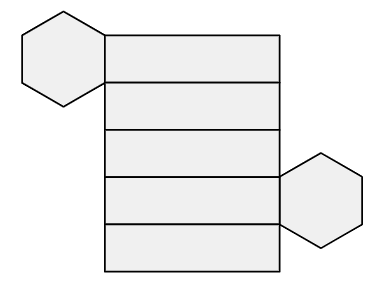
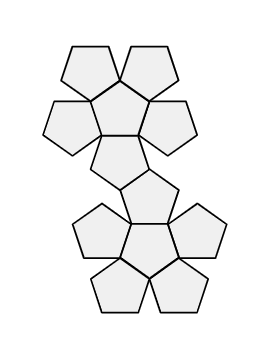
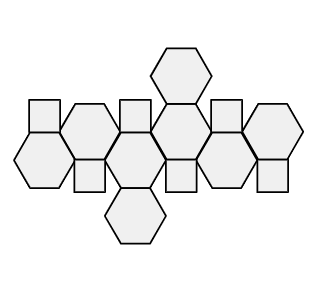
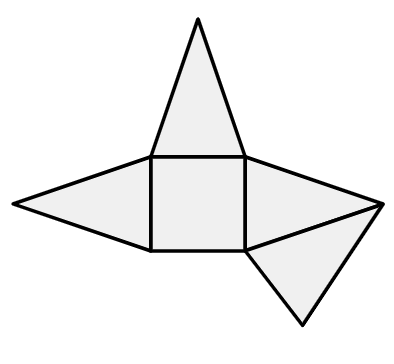
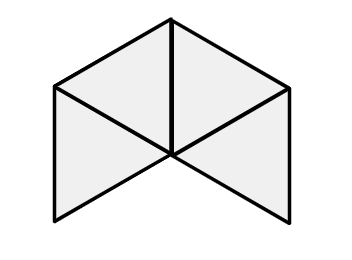
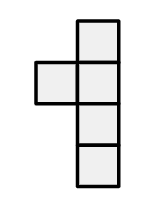
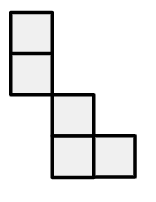
Q2.A solid is created from irregular quadrilaterals and regular hexagons only. Which of these nets could be for the solid?


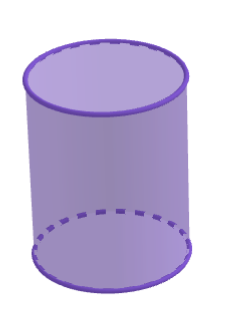
Q3.The diagram shows a net of a __________.

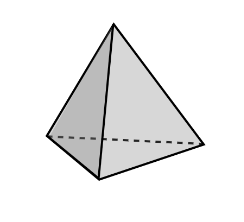
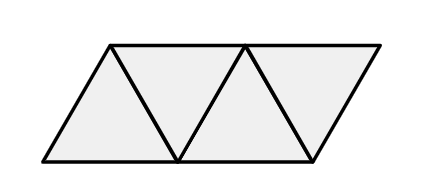
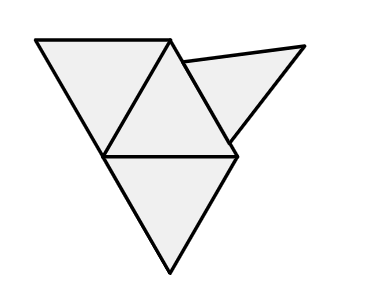
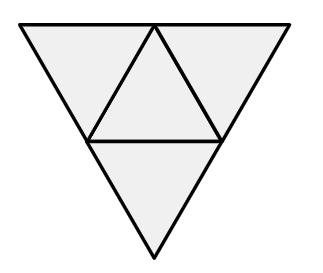
Q4.Which of these diagrams show a net for a tetrahedron?


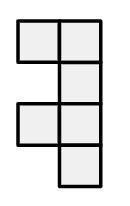
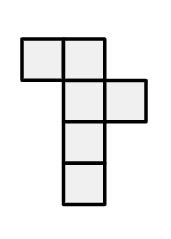
Q5.Which of these diagrams show a net of a cube?


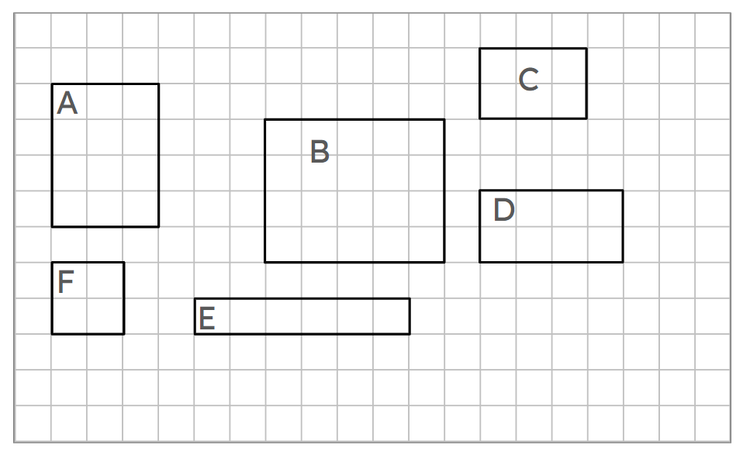
Q6.Which of the following rectangles can be used to create the net of a cuboid?

Assessment exit quiz
6 Questions
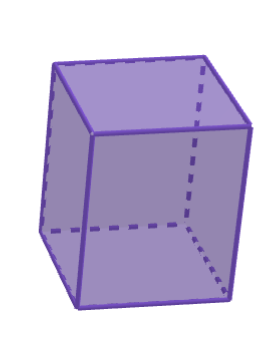
Q1.A prism is a polyhedron with a base that is a polygon and a parallel opposite face that is identical. The corresponding edges of the two polygons are joined by __________.
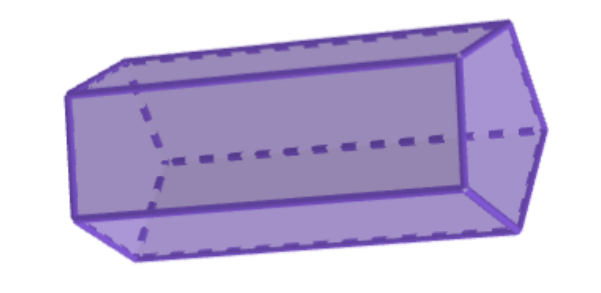
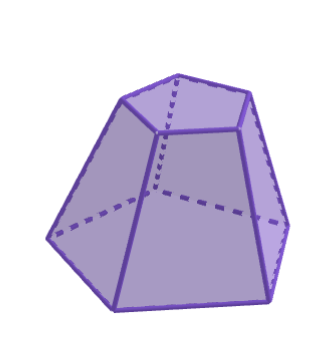
Q2.Which of these 3D solids are prisms?


Q3.A set of cuboids each have a volume of 120 cm³. Match each base of a cuboid to the correct height.
Base: 2 cm by 3 cm -
Height: 20 cm
Base: 5 cm by 2 cm -
Height: 12 cm
Base: 15 cm by 2 cm -
Height: 4 cm
Base: 8 cm by 3 cm -
Height: 5 cm
Base: 10 cm by 4 cm -
Height: 3 cm
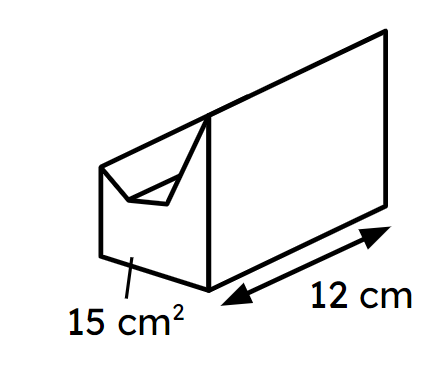
Q4.The volume of this prism is cm³.

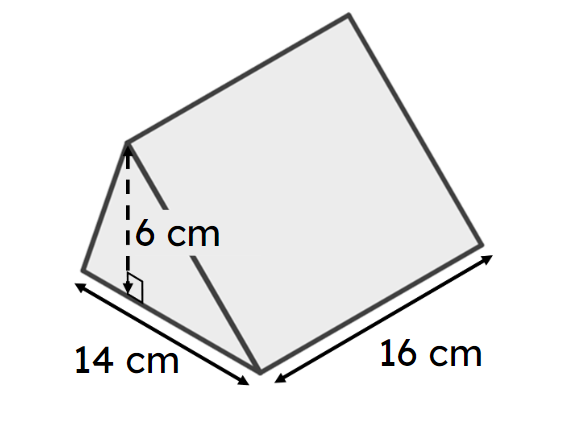
Q5.The volume of this triangular prism is cm³.

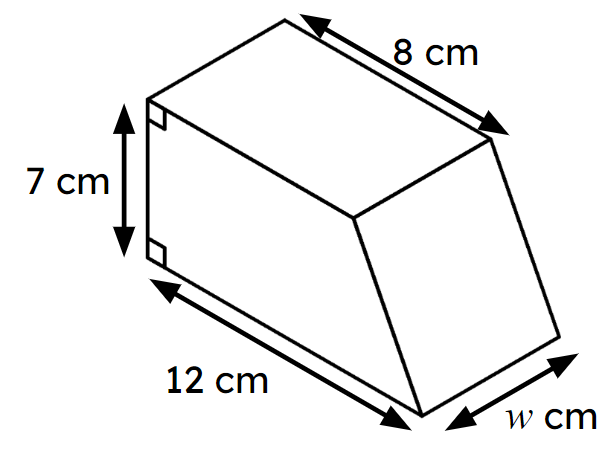
Q6.The volume of this prism is 280 cm³. The length of the side $$w$$ is cm.